

Efficient AC Foaming Agent Application Technology for PVC Profiles
Time : Mar 26, 2026 View : 169

If you examine the construction materials sector today, you will see a major change. Builders and contractors keep searching for methods to lessen weight while maintaining durability. Raw material prices continue to rise, and transporting dense solid plastics nationwide quickly reduces earnings. For this reason, producing porous or “foamed” plastics has gained much attention lately. Factories can greatly lower product density by adding small gas pockets into the plastic base. The idea seems straightforward, yet achieving an ideal mix of a firm exterior layer and a light interior section proves challenging. It demands solid understanding of chemistry, equipment, and material properties. Central to this method is the AC foaming agent. In this discussion, we will explore how this particular substance functions, the typical pitfalls to avoid, and ways to apply it for creating superior, reduced-weight construction items.
The Mechanism Behind the Bubbles
Before adding any powder to your mixer, it helps to understand what occurs within the extruder barrel. A chemical blowing agent does not remain idle. Instead, it responds strongly to warmth. When discussing foam formation, we mean a managed breakdown process.
Heat, Gas Yield, and Expansion
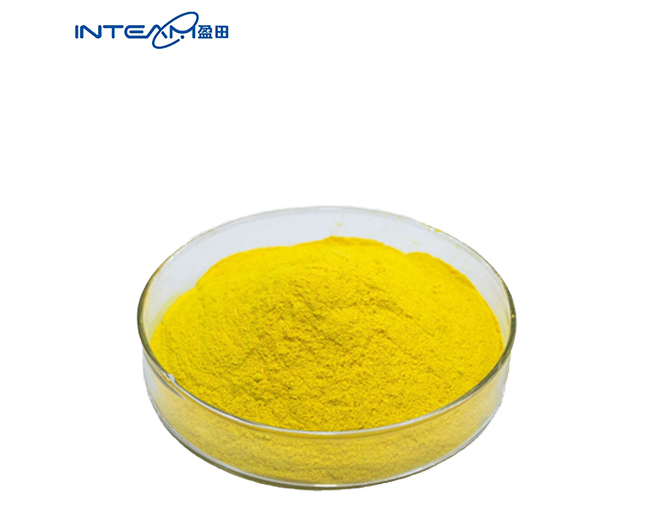
Azodicarbonamide, known widely as the AC foaming agent, appears as a yellow powder and serves as the key gas producer in numerous plastic facilities. Upon reaching its breakdown point—typically from 200°C to 210°C without aids—it decomposes and emits a large quantity of nitrogen and carbon monoxide gas. This results in a gas output of roughly 220 milliliters per gram of the powder. Such a substantial amount of gas seeks to escape from the softened plastic.
However, in a standard PVC profile manufacturing setup, operating equipment at such high levels is not feasible. PVC possesses a modest glass transition temperature of around 80°C. To soften and process it, operators generally maintain barrel heat between 160°C and 220°C. Simply including undiluted azodicarbonamide may prevent complete decomposition at the lower temperatures in that range. To address this, specialists employ activators or kickers. Adding specific zinc or lead compounds lowers the breakdown temperature of the AC powder to 150°C or 160°C. Consequently, gas liberation happens precisely when the PVC melt can expand and retain the bubbles effectively.
Controlling the PVC Melt Strength
Generating gas is only half the battle. If your melted plastic is too thin and watery, the gas bubbles will just merge together and pop. If the plastic is too stiff, the gas cannot push the material outward, and you get a heavy, dense board.
Why Viscosity Matters in Foaming
When the PVC foaming agent releases its gas, the polymer melt has to trap that gas like a balloon holding air. This ability is what we call melt strength. Pure PVC resin actually has terrible melt strength. When it gets hot, it becomes brittle and tears easily under tension. To fix this, you must add specific processing modifiers. Acrylic copolymers, often called ACR, are heavily used here. They wrap around the PVC chains and give the melt the elasticity it needs.
If your melt strength is too low, the tiny bubbles will break into each other. You will look at a cross-section of your profile and see huge, ugly holes instead of a fine, even cellular structure. On the flip side, if you add too much modifier, the melt becomes too strong. The gas from the chemical blowing agent will struggle to expand, leaving you with a product that did not drop in density at all. You just wasted money on additives. Finding that sweet spot where the plastic can stretch but not break is the secret to a good foamed profile.
The Hidden Threat of Thermal Degradation
Making foamed plastics is a delicate balancing act involving heat. You need enough heat to melt the plastic and trigger the blowing agent, but PVC is famously sensitive to heat. It wants to burn.
Managing the Heat Reaction
Here is a fact that many new factory operators miss: the decomposition of an AC blowing agent is highly exothermic. That means when it breaks down to release gas, it also releases a sudden burst of its own heat into the surrounding plastic. Now, remember that PVC starts to significantly degrade around 120°C to 130°C. When PVC gets too hot, it strips off chlorine atoms and releases hydrogen chloride (HCl) gas. This HCl gas acts as a strong catalyst, causing a “zipper reaction” that breaks down the neighboring plastic chains even faster. Your product will turn from pale yellow to orange, and eventually to brown or black.
This is why you absolutely must match your foaming system with a high-quality AC blowing agent and the right thermal stabilizers. The stabilizer has to work overtime. It needs to absorb the acidic HCl gas immediately and stop that zipper reaction before it ruins the color and physical strength of your profile. Modern plants are moving away from older, toxic lead salts and using eco-friendly calcium-zinc stabilizers. These newer stabilizers do a great job of replacing unstable chlorine atoms and stopping the degradation dead in its tracks.
The Role of Lubrication in Surface Finish
You can have the perfect bubble structure on the inside, but if the outside of your profile looks rough, dull, or has burn marks, your customer will reject it. The surface appearance comes down to how well the material slides through your machinery.
Balancing Internal and External Flow
Within PVC foam additives, lubricants serve as vital but overlooked components. They provide lubrication for the plastic melt. Experts classify them into internal and external types. Internal lubricants bond well with PVC molecules. They slide amid the polymer chains, easing internal friction and aiding quicker melting while reducing overall thickness.
External lubricants, such as polyethylene wax, blend poorly with PVC. They migrate to the melt’s surface and create a slim lubricating layer between the plastic and the heated metal surfaces of the extruder and die. Achieving proper equilibrium here allows for production speed gains of 15% to 30% and energy savings of 10% to 20%, according to records. Nevertheless, excess external lubricant causes the plastic to glide excessively, hindering thorough blending with the AC foaming agent. Insufficient amounts lead to adhesion on metal parts, scorching, and damage to the even outer layer of the foamed profile.
Troubleshooting Common Factory Issues
Even with a perfect recipe on paper, the reality of a busy factory floor brings unexpected problems. Small changes in factory temperature or raw material batches can throw your whole foaming process out of line.
Fixing Discoloration and Bubble Collapse
Suppose you retrieve a profile from the cooling unit and detect a faint yellow shade, or perhaps it weighs more than expected. Start by inspecting screw rotation and heat sections. Excessive extruder speed produces intense shear warmth, degrading PVC prior to reaching the die. Adjusting temperatures in the barrel’s central areas downward may offset the extra heat from the foaming agent.
A frequent problem involves an uneven, ridged exterior. This typically arises when gas pockets pierce the surface layer before the plastic cools and solidifies in the shaping tool. Addressing it might involve slightly reducing the die heat. Such an adjustment forms a sturdier, denser skin on the melt’s exterior, securely containing the growing bubbles within the interior.
Choosing the Right Additive Partner
Buying chemicals out of a catalog is easy, but getting them to work perfectly in your specific machines takes real expertise. Every extruder has a different screw design, and every product has different strength requirements.
Because the interactions between the resin, the stabilizers, and the foaming agents are so complex, you need an experienced manufacturer behind you. At Inteam, we do not just sell bags of powder. We focus heavily on the research and production of high-tech PVC additives. If you are struggling with cell collapse, poor surface gloss, or want to drop your product density further, you can check ourapplication guide to see how our materials perform in the real world. If you need a custom formulation tailored to your factory’s setup, please contact us today. We can help you find that perfect balance.
FAQs
Q: What is the main function of an AC foaming agent?
A: It breaks down under heat to release gas, creating tiny bubbles that lower the weight of plastic products.
Q: Why is my PVC profile production turning yellow?
A: This usually means the plastic is getting too hot. You need better thermal stabilizers to stop the heat degradation.
Q: Can I use any chemical blowing agent for PVC?
A: No. You must choose one that matches the specific melting temperature and melt strength of your PVC formula.