

How Can Ca/Zn Stabilizer Boost PVC Extrusion Efficiency Safely?
Time : Feb 19, 2026 View : 344
The global plastics industry is standing at a major crossroads. For many years, lead-based helpers served as the usual choice for firm PVC pipes and shapes. They cost little and proved easy to work with. But the situation has shifted. Rules on the environment grow stricter. The market calls for safer, more earth-friendly options. As a plant leader or site owner, you may feel concerned. You wonder: “If I make a green choice, will my work pace slow? Will my waste level rise?”
Such questions make sense. In earlier times, the first non-lead picks were hard to manage. Yet, current science has closed that divide. Now, a solid calcium zinc stabilizer goes further than matching safety rules; it can help your extrusion setups move better and quicker. It no longer acts as a mere stand-in; it serves as an improvement. Let us check how this earth-friendly method functions, why it holds the answer to mixing work output with nature safety, and how it acts within your machine.
The Science Behind Safe Stabilization
To understand how we can run a machine faster without burning the material, we have to look at what happens inside the PVC mixture. PVC is naturally unstable when heated. Without protection, it releases hydrogen chloride (HCl) gas, which causes the plastic to turn yellow, then black, and finally degrade completely. This is the nightmare scenario for any extruder operator.
The Synergistic Effect of Calcium and Zinc
Old-school lead stabilizers worked like a sponge, simply soaking up the HCl. A calcium zinc stabilizer is much smarter. It uses a “tag-team” approach based on the Frye-Horst mechanism.
Here is how it works: The zinc soap is the active player. It reacts rapidly with the unstable parts of the PVC chain (specifically the allyl chloride) to stop the degradation before it starts. This keeps the initial color of your product pure and white. However, zinc chloride (the byproduct) can eventually cause the PVC to degrade if left alone. This is where the calcium steps in. The calcium soap reacts with the zinc chloride to regenerate the zinc soap.
This cycle means the stabilizer is constantly recharging itself. For the manufacturer, this chemical synergy translates to excellent long-term thermal stability. You can run your extruder for longer periods without worrying about the material burning or discoloring in the barrel.
Now that we have established the chemical foundation of how these two metals work together to protect the polymer chains, we need to translate this into the daily reality of your factory floor. Chemistry is great on paper, but how does this specific reaction cycle help you reduce downtime and improve the actual output rate of your machinery?
Boosting Extrusion Efficiency on the Floor
Efficiency in extrusion comes down to three things: speed, consistency, and uptime. If you are constantly stopping to clean the die or adjusting the temperature because the material is surging, you are losing money. A premium PVC heat stabilizer is designed to eliminate these bottlenecks.
Improved Melt Flow and Lubricity
One of the biggest misconceptions is that eco-friendly stabilizers make the melt “stiff” or hard to push through the die. This is largely a myth today. Modern Ca/Zn formulations are often complex systems that include internal and external lubricants.
A good stabilizer package acts as a flow modifier. It reduces the friction between the PVC particles (internal lubrication) and prevents the hot melt from sticking to the metal screw and barrel (external lubrication). When the friction is balanced, you use less energy (lower amps) to run the extruder. The material flows like water through a hose—smooth and consistent. This allows you to increase the RPM of the screw without generating excessive shear heat, effectively boosting your output per hour.
Solving the “Plate-Out” Problem
In the early days of non-lead stabilizers, “plate-out” was a common headache. This is when a sticky residue builds up on the die lips or calibration sleeve. It forces operators to stop the line every few hours to scrape it off.
Leading manufacturers have solved this by adjusting the polarity of the calcium zinc stabilizer. By ensuring the additive is highly compatible with the PVC resin, it stays inside the material rather than migrating to the surface. Less plate-out means you can run continuous shifts without stopping for cleaning. If you are running high-volume pipe or window profile production, eliminating those cleaning stops can add up to hours of extra production time every week.
We have seen how the stabilizer improves the physical flow and reduces machine downtime. But there is another layer to efficiency that starts before the material even enters the extruder. It begins in the mixing room. The physical form of the additive you choose plays a massive role in how fast and accurately you can prepare your raw materials.
The Power of PVC Compound Stabilizers
In a traditional mixing setup, an operator might have to weigh out five or six different small ingredients: the stabilizer, the lubricant, the impact modifier, the antioxidant, and the pigment. This is slow and prone to human error. If the operator forgets to add the lubricant, the batch is ruined.
The “One-Pack” Solution
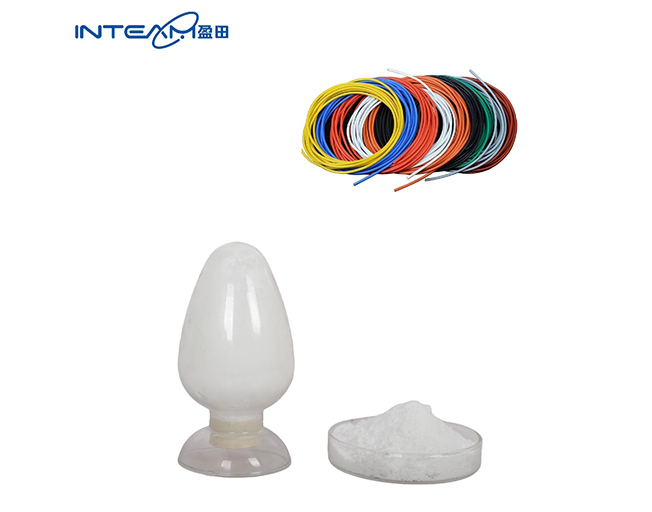
This is where the PVC compound stabilizer changes the game. Also known as a “one-pack” system, this product combines the heat stabilizer with lubricants, antioxidants, and other necessary additives into a single, dust-free granule or powder.
Using a compound stabilizer simplifies your supply chain and your mixing process. Instead of sourcing five different chemicals, you source one. You reduce the risk of weighing errors to zero. Furthermore, because the manufacturer has already pre-dispersed the ingredients, you get a more uniform mixture. This consistency in the hopper leads to consistency in the extruder. You won’t see fluctuations in wall thickness or color because every pellet of compound has the exact right ratio of ingredients.
Dust-Free Environment
Protection extends beyond merely the harm potential of the item; it encompasses the labor setting, too. Standard dusts may generate considerable dust, posing a wellness danger and ignition threat. Numerous compound stabilizers aim to remain low-dust. This maintains your blending area tidy and shields the respiratory systems of your employees. A tidy, protected setting naturally fosters improved spirit and elevated output.
Although the item itself proves essential, the blend requires alignment with your particular equipment and item demands. Not every Ca/Zn stabilizer swaps seamlessly. This guides us to the concluding, and possibly most important, phase in the procedure: locating a provider who comprehends the distinct requirements of your creation line.
Partner with the Right Ca/Zn Stabilizer Manufacturer
You cannot merely purchase a standard sack of Ca/Zn stabilizer and anticipate flawless performance in each device. A dual-screw extrusion device producing broad pipes encounters varied friction forces compared to a single-screw extrusion device producing healthcare pipes.
Customization is Key
A professional Ca/Zn stabilizer manufacturer like Inteam does not just sell products; We also sell formulations. We will look at your equipment, your raw materials (such as the K-value of your resin), and your final product specifications.
For example, if you are producing highly transparent medical hoses, you need a formulation that maximizes clarity and minimizes water blushing. If you are making rigid window profiles, you need a Ca/Zn stabilizer that focuses on weather resistance and impact strength. Inteam offers specific series, such as the PVC heat stabilizer lines, which are tailored for different applications.
Technical Support and Testing
Genuine yield derives from precise adjustments. A capable provider will supply technical service to assist you in modifying the quantity. They may review your existing creation concerns—whether scorching, coarse exterior completion, or measurement unsteadiness—and refine the stabilizer formula to resolve it.
Altering to a non-toxic stabilizer constitutes a chemical procedure shift. Possessing a knowledgeable group to direct you through the alteration guarantees you avoid squandering substance on experiments and mistakes. They may assist you in establishing the correct warmth outline for the fresh addition, guaranteeing you attain maximum velocity from the initial day.
To conclude matters, let us consider the broader view. The alteration to calcium zinc frequently appears as a guideline load, yet as we have examined, it truly represents a prospect to update your complete production outlook.
Conclusion
The alteration from lead to calcium zinc remains unavoidable, yet it need not cause distress. Indeed, it opens a path to superior fabrication. Through embracing a high-function calcium zinc stabilizer, you guarantee your items remain secure for users and adhere to worldwide environmental criteria.
Yet more significantly, you commit resources to the yield of your facility. Via improved melt management, lessened halt periods for washing, and the ease of compound arrangements, you may attain greater yields and diminished discard ratios. It constitutes a mutual benefit: you acquire the “nature-kind” tag that clients desire, alongside the “yield” figures your enterprise demands.
If you are ready to modernize your PVC extrusion line, do not settle for a generic solution. Contact us now! Explore the specialized applications and products available at Inteam. Our expertise in non-toxic additives can help you navigate this transition smoothly, ensuring your factory stays competitive and compliant for years to come.
FAQs
Q: Is a calcium zinc stabilizer as effective as a lead-based one for rigid pipes?
A: Yes, modern Ca/Zn formulations offer comparable thermal stability and often better weather resistance than traditional lead salts.
Q: Can I use the same Ca/Zn stabilizer for both pipes and cables?
A: No. Cable formulations require specific electrical insulation properties, while pipes need high stiffness. You need different grades.
Q: Is calcium zinc stabilizer suitable for food-contact PVC products?
A: Yes, high-quality Ca/Zn stabilizers are non-toxic and compliant with many FDA and EU food