

How Does Advanced PVC Lubricant Ensure Smooth Production Efficiency?
Time : Feb 26, 2026 View : 336
In the high-pressure world of plastics manufacturing, the gap between a money-making shift and an expensive halt usually depends on the tiniest details in your mix. Picture your extruder operating at top level. The heaters work, the screw spins, and the resin melts. But all of a sudden, the power use jumps. The material begins to char at the die, or even worse, the surface of your pipe ends up rough and dull like sharkskin. These are not simple tech problems; they act as money drains. Big energy use, regular cleaning breaks, and lots of waste cut right into your earnings. While plenty of makers pay close attention to the resin or the heat stabilizer, the quiet star in the blending area is often the PVC lubricant. It serves as the unseen helper that lets rigid PVC—a substance that sticks by nature and proves hard to handle—move like liquid through your machines.
Grasping how to steady the slide and the stream is the key to real factory success. Let’s look into the workings of lubrication and see how the proper additive set can change your work line.
The Invisible Battle Against Friction
When you dump PVC resin into a hopper, you start a fight against drag. Two kinds of push-back happen at the same time inside the barrel: the drag between the PVC bits themselves, and the drag between the warm plastic and the metal parts of the gear. Without any help, this drag creates wild heat, which leads to stuff breaking down and tools wearing out.
The Role of the Internal Lubricant
The initial shield works deep within the polymer melt. PVC molecules have poles, so they pull toward each other with strength. This pull makes the melted plastic thick and sticky, much like chilled honey. To make it flow, you must cut this inner thickness.
This task belongs to an internal lubricant. In terms of chemicals, these additions fit well with PVC resin. They slip between the polymer strands, basically nudging them a bit apart and weakening the pull forces. You can view them as tiny rollers at the molecule stage.
When you add the right amount of a top-notch internal lubricant, the melt thickness falls. This lets the screw turn with less fight, and that straight away drops the twist and power load on your extruder motor. It also boosts the heat spread inside the stuff, making sure the plastic melts evenly without creating risky “hot areas” that lead to scorching.
The Power of External Lubrication
While internal lubricants manage the flow, we still deal with the issue of the plastic clinging to the device. Warm PVC tends to stick to warm metal. If it clings to the screw, it breaks down. If it clings to the die, you see flow marks and bumpy surfaces.
This is the spot where the external lubricant comes in. Unlike the internal type, an external lubricant fits poorly with PVC. It avoids blending. Instead, it moves to the top of the melt, forming a very thin, slick layer between the plastic and the metal.
A common case of this is polyethylene wax. When mixed in, it covers the metal surfaces, letting the PVC glide through the barrel and die without clinging. This “slide effect” proves vital for the top look of the end item. A properly oiled extrusion will make pipes or shapes with a shiny, mirror-like finish, and that often serves as a main draw for buyers.
Calcium Stearate: The Versatile Workhorse
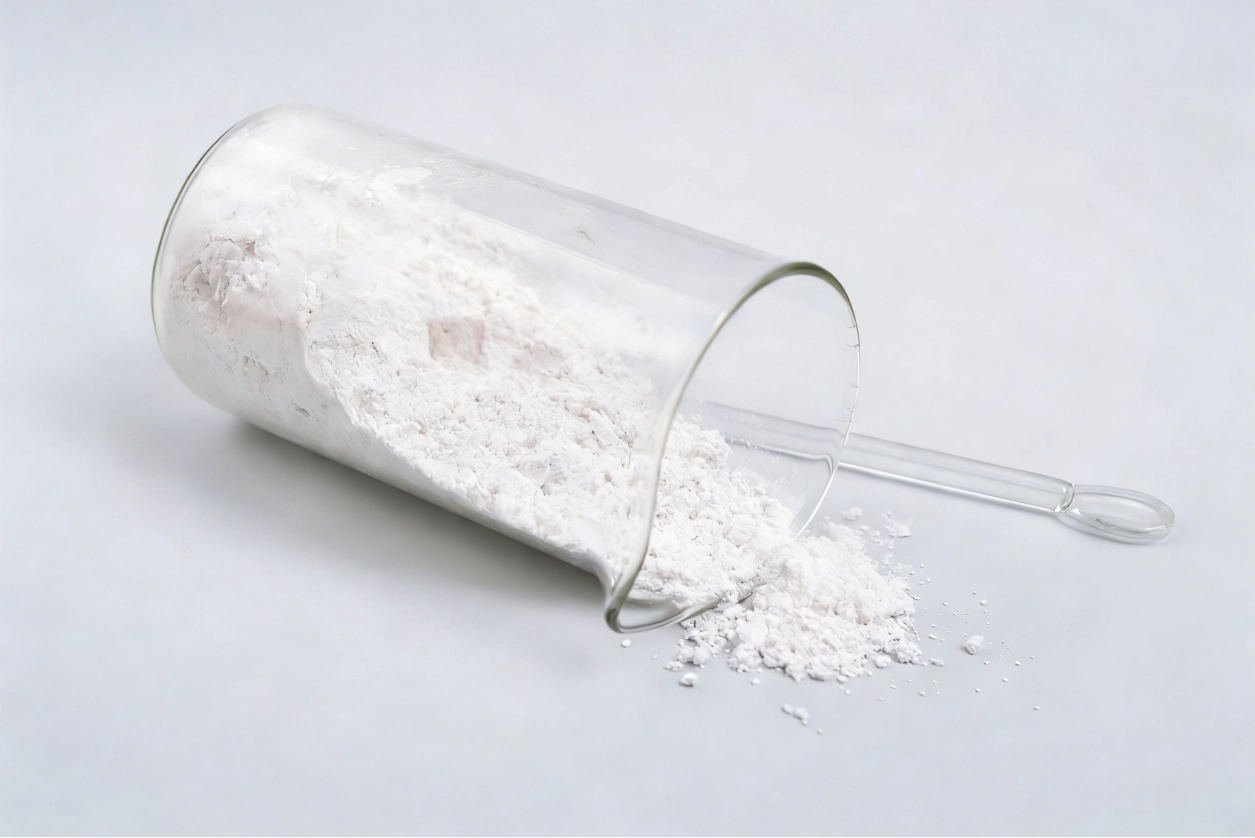
In the toolbox of PVC additives, few ingredients are as essential or as widely used as calcium stearate. It is often categorized primarily as a co-stabilizer, but its contribution to the lubrication system is equally critical for smooth processing.
More Than Just a Stabilizer
Calcium stearate acts as a powerful internal lubricant with some external properties. When used in conjunction with primary stabilizers, it helps to scavenge the hydrogen chloride (HCl) released during heating, preventing the plastic from discoloration. However, its physical impact on the melt is what interests us here.
It promotes the fusion of PVC particles. In the early stages of the extruder barrel (the feed zone), calcium stearate helps the resin grains break down and begin to melt uniformly. Without this “fusion promotion,” you might get un-melted “fish eyes” in your final product. Furthermore, it acts as a release agent. While not as slippery as wax, it helps prevent the hot mix from sticking to the mold or calibration sleeve, which is crucial for injection molding applications.
Synergy with Other Waxes
The magic really happens when you combine calcium stearate with other waxes. It doesn’t work alone. In a typical pipe or profile formulation, it is paired with paraffin wax or polyethylene wax. The calcium stearate handles the melt viscosity and fusion promotion, while the wax handles the metal release.
Finding the right ratio between these two is an art form. Too much calcium stearate, and you might get “plate-out”—a nasty buildup of chemical residue on the die lips that forces you to stop and clean. Too little, and you risk burning the material due to high shear heat.
Lubricants as a Critical PVC Extrusion Aid
We often think of processing aids as a separate category of additives, usually acrylic-based, that help with melt strength. However, a well-balanced lubricant system functions effectively as a PVC extrusion aid. It facilitates the entire mechanical process from the hopper to the haul-off unit.
Reducing Energy Consumption
Energy costs are one of the largest overheads in plastics processing. An extruder motor fighting against high-viscosity material draws a massive amount of current. By introducing a lubricant package that effectively lowers friction, you can see a significant drop in amp draw.
Facts from the field show that right lubrication can cut energy use by 10% to 20%. Over a year of round-the-clock making, this adds up to thousands in savings. The lubricant lets the machine operate wiser, not tougher. It cuts the machine strain on the screw, barrel, and gearbox, stretching the life of your costly main tools.
Increasing Output Rates
Time equals cash. If you can speed up your line without harming quality, you boost your earnings edge. The cap on speed often comes from the “melt break” or top flaws that show when you force the stuff too much.
Top lubricants, like advanced polyethylene wax mixes or oxidized waxes, permit higher cut rates. They maintain the surface even when the stuff moves fast through the die. This allows you to raise the turns of the extruder and gain more lengths of pipe or shape each hour. Also, since the stuff clears the barrel neatly, you use less time on switches and clearing, which keeps your run time high.
Troubleshooting Lubrication Imbalances
When the lubrication steady is wrong, the extruder signals you. You simply need to learn how to hear it. The signs of too much lubrication and too little differ, and spotting them fast can spare heaps of waste stuff.
If you have excess internal lubricant, the stuff turns too slick inside. It fails to create enough drag to melt right, leading to bad blending and weak items. If you have excess external lubricant, the stuff slides on the screw and refuses to advance (surging), or it will not join in the die, causing thin weld lines.
Solving the “Plate-Out” Nightmare
One of the most frustrating issues is plate-out. This occurs when incompatible additives migrate to the surface and accumulate on the metal die. Over time, this buildup drags on the hot plastic, causing streaks and rough spots.
This is often a sign that your PVC lubricant system is incompatible with your stabilizer or resin. Using high-purity calcium stearate and refined waxes can minimize this. Cheaper, low-quality lubricants often contain impurities that burn and deposit on the die. switching to a cleaner, more compatible lubricant package from a reputable supplier can eliminate these cleaning stops.
Selecting the Right Solution for Your Line
The market is flooded with generic waxes and stearates. However, for a high-tech enterprise, the goal is consistency. You need a PVC lubricant that performs exactly the same way in summer as it does in winter, batch after batch.
Customized Additive Packages
Leading manufacturers like Inteam understand that a pipe formulation is different from a fitting formulation. A transparent medical tube needs a different lubrication balance than a rigid window frame.
For example, complex profiles often require a specialized PVC extrusion aid that provides extra metal release to prevent sticking in the intricate parts of the die. In contrast, injection molding requires high flow to fill the mold cavity quickly.
By consulting with technical experts, you can move away from guessing and move toward precision. They can help you replace single-component additives with balanced “one-pack” systems or guide you on the exact ratio of calcium stearate to wax needed for your specific screw design.
Conclusion
In the end, the cost of the lubricant is a tiny fraction of your total raw material cost, yet it controls the behavior of the entire batch. Skimping on quality here is a false economy. A cheap lubricant that causes a 2-hour shutdown for die cleaning has just cost you more than a year’s supply of premium additives.
By choosing an advanced PVC lubricant system, you are buying insurance for your production line. You are securing lower energy bills, higher output speeds, and a premium surface finish that delights your customers. Whether you need the stabilizing power of calcium stearate or the slip of polyethylene wax, the right choice will keep your factory humming.
If you are facing issues with high torque, plate-out, or rough surfaces, do not accept them as “normal.” Contact us now, and Inteam‘s experts will help you understand how lubricant upgrades can boost your efficiency.
FAQs
Q: What is the main difference between polyethylene wax and oxidized polyethylene wax?
A: Polyethylene wax is primarily an external lubricant for metal release. Oxidized wax has polar groups, providing both internal and external lubrication for better melting speed.
Q: Can calcium stearate be used as the only lubricant in a PVC formulation?
A: No. While calcium stearate helps with fusion, it lacks sufficient external lubrication. You must pair it with a wax to prevent the PVC from sticking to the machine.
Q: How does a PVC extrusion aid differ from a standard lubricant?
A: A PVC extrusion aid (often acrylic) mainly boosts melt strength and elasticity. Lubricants primarily reduce friction and viscosity, though they also assist the overall extrusion process.