
How PVC Stabilizer Systems Control Color Stability
Time : Aug 20, 2026 المشاهدات : 382
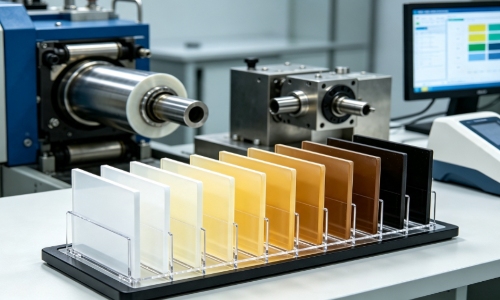
A PVC product can leave the die with the right shade and still drift yellow, brown, or black later in the run. That pattern makes color more than an appearance issue: it is a practical signal of the PVC stabilizer system, lubrication balance, heat history, and equipment condition. This guide explains how production teams can read those signals and evaluate color stability across an entire formulation, not through a single additive or product grade.
Color Reveals the Degradation Timeline
A استقرار PVC delays the dehydrochlorination of PVC during heat and shear. PVC molecular chains have inherent weak structures, processing temperature 160–220℃ is far higher than its initial degradation temperature of 120–130℃. Once hydrogen chloride is released, it triggers autocatalytic zipper reaction to accelerate further degradation, while conjugated polyene sequences develop and the material moves from pale yellow toward darker colors. Color therefore records when the protective system begins to lose control, although it does not identify the cause by itself.
The time pattern matters as much as the shade. Discoloration in the first minutes points toward initial color control, pigment interaction, or excessive early heat. A shade that worsens during a long run suggests depleted long-term protection, accumulating residence time, local overheating or torque surge. Sudden black lines and isolated specks more often direct attention to dead zones, friction, plate-out / die buildup, contamination, retained degraded material or mechanical seizure.
Three Stability Measures Answer Different Questions
Initial stability protects the first acceptable color
Initial stability describes how well a formulation suppresses early coloring and keeps shade differences within an acceptable window at the start of production and between production cycles. Early stabilizers like cadmium-zinc soaps excel at initial color but produce catalytic ZnCl₂/CdCl₂, leading to sudden blackening and poor long-term stability. A good opening shade, however, does not prove that the same system can survive a long residence time or a disrupted line.
Long-term stability protects the production window
Long-term stability describes how long the compound remains processable before decomposition and color change become unacceptable. Long-term stabilizers such as lead salts, calcium/rare earth soaps mainly absorb HCl, their chlorides have no catalytic activity with little early color improvement. This margin becomes important during slower output, shutdowns, temperature variation, or material retained in the screw and die. A system with balanced long-term protection reduces the risk that a brief interruption turns into dark discharge, extensive cleaning, and a large block of off-color production.
Residual stability protects the finished article
Residual stability concerns the heat resistance remaining after processing. It connects the factory trial to the product’s service conditions, because a formulation that only survives extrusion may still have too little reserve for later heat exposure. These three measures should be recorded separately rather than compressed into one vague claim of good stability.
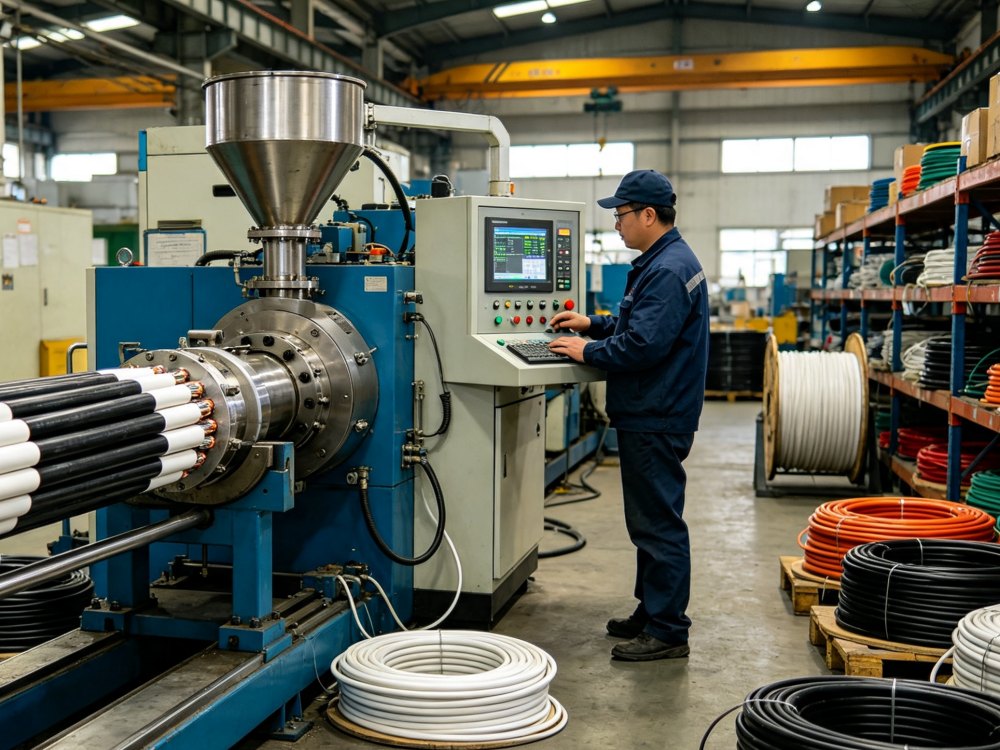
System Chemistry Shapes the Color Curve
A استقرار حرارة PVC works via six synergistic mechanisms: absorb HCl, displace unstable chlorine, inhibit oxidation, passivate carbocations, break polyene chains, chelate metal ions. Practical systems combine complementary stabilizers and auxiliary PVC stabilizers.
Calcium-zinc and composite lead-salt systems can provide useful heat protection, but suitability depends on the finished product, processing conditions, hygiene or market requirements, and the rest of the recipe. Calcium-zinc needs matched phosphite, polyol and β-diketone synergists to avoid zinc burning and plate-out. Lead salts deliver strong long-term stability and insulation but are toxic, covering around 60% global usage for pipes and sheets. We also have all-purpose organotin stabilizers for transparent non-toxic products, and liquid barium-zinc for soft films.
Phosphite auxiliary stabilizers greatly lift initial color retention; residual phenol or hydrolysis will cause finished profiles to turn reddish-brown outdoors.
- Compare initial color and long-term color retention separately.
- Test the stabilizer with the production resin, filler, pigment, lubricant package, ACR processing aid and wax emulsion.
- Match chemistry to the product’s actual end market and service conditions.
- Judge the complete process window instead of ranking systems by dosage alone.
Formulation and Processing Must Be Read Together
A PVC compound stabilizer is designed around synergy, but it still operates inside a larger recipe. Plasticizers, processing aids, foaming agents, pigments, fillers, and lubricants can change fusion, shear, dispersion, and heat exposure. A color problem that appears after a formulation change should therefore be investigated as a system interaction rather than assigned automatically to the stabilizer.
Heat load changes with residence time and shear
Barrel settings alone do not define the material’s heat history. Screw speed, feed balance, die resistance, startup practice, cooling, local friction and torque surge all affect the load seen by the compound. Reducing excessive temperature or shear can improve yellowing when the formulation is otherwise suitable, while thermocouple or screw clearance faults can create sudden color changes that extra stabilizer will not correct.
Lubrication controls where heat is generated
Internal lubricants cut internal melt friction; external lubricants migrate to metal surfaces to prevent sticking, PE wax emulsion reduces die buildup. Too little lubrication causes sticking, torque surge and yellowing; excess lubrication triggers plate-out and whitening. Color trials should record torque, torque surge, output, surface quality, plate-out and discharge after a stop so that apparent stability gains do not hide a narrower process window. ACR affects fusion speed and shear heat as well.
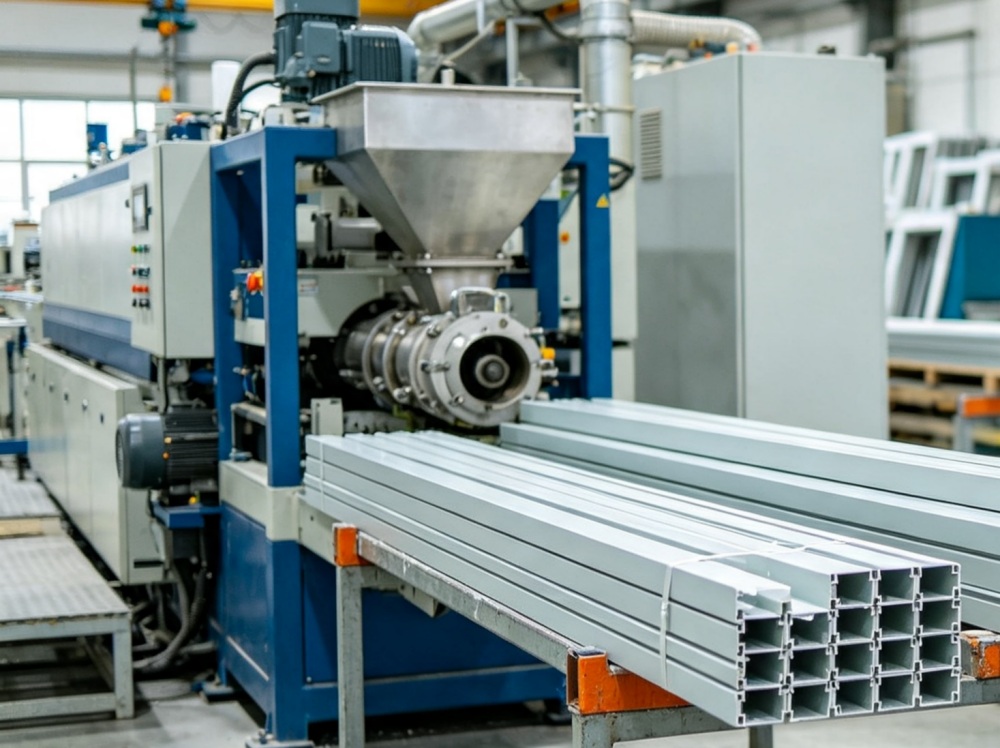
Diagnose Color Drift by Pattern
A review of PVC degradation and stabilization starts with when and where the defect appears. Change one variable at a time, preserve a reference batch, and compare color at defined points. The table keeps formulation and equipment causes together without assuming every yellow product needs more stabilizer.
Observed pattern | Priority checks | Reasoning |
Yellow from startup | Initial stability, startup method, barrel heat, pigment, phosphite dosage | The system is losing color control early. |
Color darkens through the run | Residence time, long-term stability, shear, lubrication, zinc burning risk | Protection or process margin is being consumed. |
Yellow or black lines | Screw-barrel friction, die dead zones, die buildup, carbonized residue | Localized overheating or decomposed carryover. |
Random black specks | Raw-material cleanliness, vacuum port, mixer deposits, wax dust impurities | Contamination or stagnant degraded material. |
Color changes after recipe adjustment | Additive compatibility, dispersion, lubrication balance, phosphite hydrolysis | New interactions shift heat history or generate discoloring byproducts. |
Practical Takeaway
Reliable color control matches stabilizer chemistry to the complete formulation and the line’s heat history. Track initial, long-term, and residual stability separately; then use defect timing and location to distinguish formulation limits from process faults like torque surge, die buildup, plate-out and mechanical seizure. This turns PVC thermal stability into a measurable operating window.
Once a plant has separated formulation, process, and equipment variables, it can compare stabilizer systems under the same trial conditions. Inteam supplies calcium-zinc, composite lead-salt, organotin and liquid barium-zinc stabilizer series for different PVC applications; discuss your formulation and color-stability target to define a relevant test plan rather than select a single grade from a general description.
التعليمات
What does early yellowing indicate in PVC processing?
Early yellowing can indicate weak initial color control, insufficient phosphite/β-diketone auxiliaries, excessive startup heat, high shear, pigment interaction, or unsuitable startup practice. Check timing, torque surge data and reference formulation before raising stabilizer dosage.
Is better initial color the same as better long-term stability?
No. Initial stability describes early color suppression, while long-term stability describes the time margin before decomposition and discoloration become unacceptable. A balanced multi-component system needs both for stable running.
Can more stabilizer always solve PVC discoloration?
No. Extra stabilizer only works when heat protection is insufficient; it cannot fix die buildup, plate-out, torque surge, lubrication imbalance, zinc burning or equipment contamination.
How should PVC thermal stability be compared in trials?
Use identical resin, full additive package, equipment settings, sampling timing and color test standards. Record startup shade, runtime color shift, post-shutdown discharge, torque surge, plate-out and residual heat aging data.
Why are heat stabilizers for PVC usually multi-component systems?
Different components tackle different degradation links: zinc soap/phosphite improve initial color; lead/calcium soap provide long-term HCl absorption; lubricants, ACR and β-diketone balance processing performance. Single additives cannot cover all requirements simultaneously.