

¿Por qué el calcio-zinc está reemplazando al plomo en las aplicaciones modernas de estabilización de PVC?
Fecha: 11 de junio de 2026 View : 2,385

Evolución de la protección térmica en el procesamiento de polímeros
El estabilizador de PVC desempeña un papel fundamental para garantizar la integridad estructural a largo plazo del PVC durante el procesamiento a altas temperaturas. La resina de PVC es inherentemente sensible al calor y comienza a degradarse significativamente a temperaturas de 120 °C a 130 °C. Sin embargo, el procesamiento del PVC se realiza normalmente a temperaturas que oscilan entre 160 °C y 220 °C. Por lo tanto, en ausencia de un estabilizador de PVC eficaz, la resina de PVC se deteriorará rápidamente debido a reacciones de degradación como la deshidrocloración. Tras la deshidrocloración, el gas cloruro de hidrógeno (HCl) que se produce es extremadamente corrosivo. Este gas HCl, a su vez, puede provocar que el PVC experimente una reacción autocatalítica de tipo "cremallera". Las diversas formas de degradación descritas anteriormente pueden causar una serie de fallos críticos:
Decoloración severa que va desde incolora hasta amarillo pálido, y finalmente hasta el ennegrecimiento total. Disminución rápida de las propiedades físicas y mecánicas, lo que provoca fragilidad del producto. Corrosión de maquinaria y equipos debido a la liberación de humos ácidos. La formación de secuencias de polienos conjugados compromete el valor estético y estructural del material.
La elección de un estabilizador de PVC debe tener en cuenta la tecnología de procesamiento y los requisitos que se exigen al producto final. Inteam ofrece una amplia gama de productos que intervienen en los ciclos de degradación del PVC neutralizando el HCl y eliminando los átomos de cloro inestables.
Clasificación de los estabilizadores de PVC de alto rendimiento
Los estabilizadores de PVC disponibles en el mercado global se desarrollan para satisfacer las necesidades específicas de cada aplicación y a un precio óptimo. Estos sistemas pueden ser de un solo aditivo y un solo componente, o de un solo paquete y compuesto.
Estabilizadores de sal de plomo: Estos son los materiales más típicos para la estabilización térmica y eléctrica, debido a su gran estabilidad térmica y excelentes propiedades de aislamiento eléctrico. Desafortunadamente, son tóxicos.
Estabilizador de calcio y zinc: La alternativa no tóxica y ecológica a otros estabilizadores, cuyo uso es cada vez más obligatorio en aplicaciones en contacto con alimentos, así como en aplicaciones médicas.
Estabilizadores de organoestaño: Sistemas de estabilización altamente eficientes, aspecto transparente, alta resistencia al calor y, por lo tanto, adecuados para aplicaciones de embalaje de alta gama.
Sistemas compuestos líquidos: Nuestros sistemas de composite líquido presentan una dispersión a nivel molecular y la mejor compatibilidad con las resinas en comparación con todas nuestras formulaciones en polvo sólido.
Estabilizadores auxiliares: Se trata de compuestos orgánicos puros que funcionan como aditivos para aceites lubricantes, como fosfitos, compuestos epoxi, etc., para producir un efecto sinérgico con los jabones metálicos primarios.
Factores que impulsan el declive de los sistemas estabilizadores de plomo de PVC
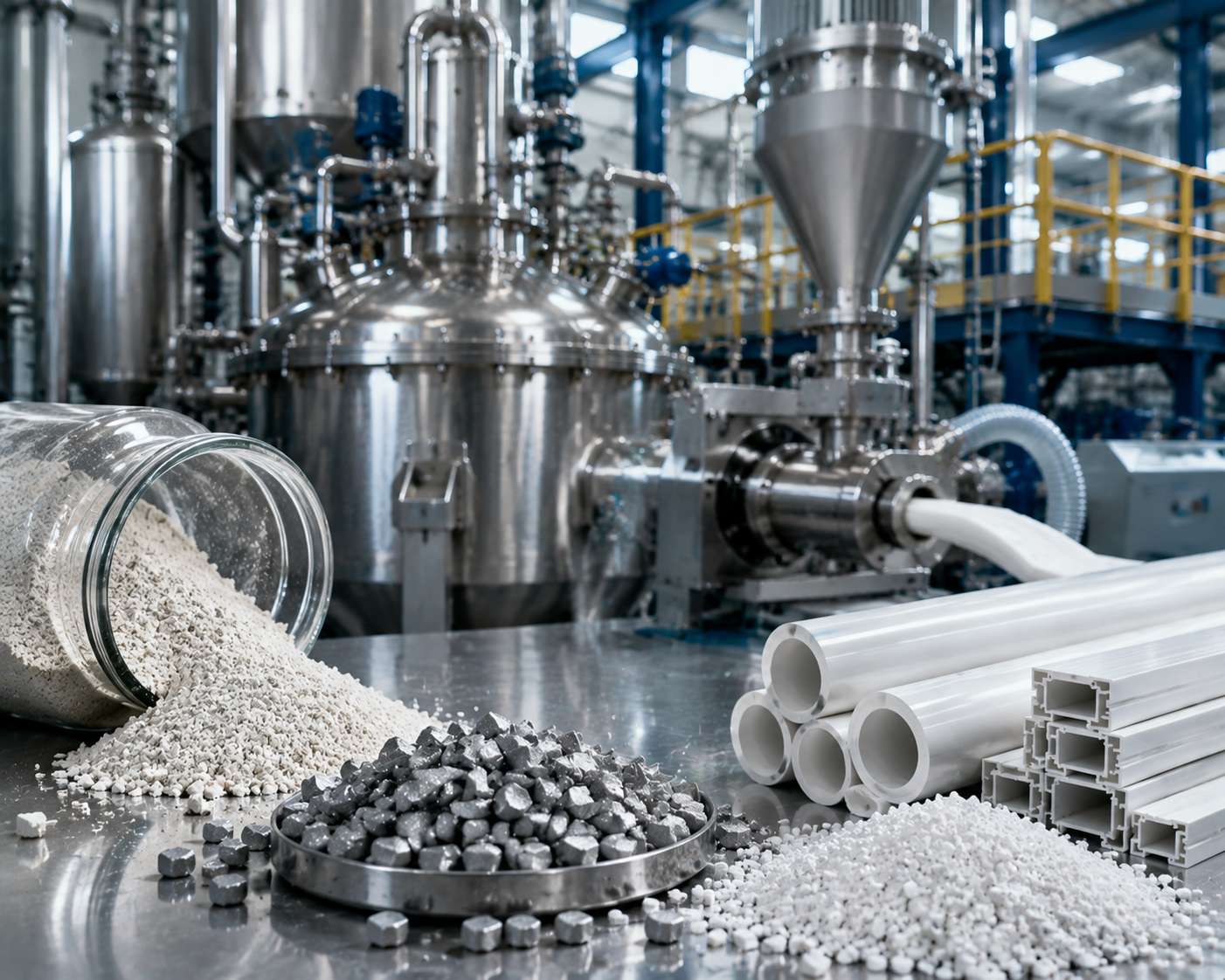
Si bien el estabilizador de plomo para PVC ha sido el estándar de la industria durante décadas, su cuota de mercado global ha disminuido desde aproximadamente el 60 % en años anteriores hasta la actualidad. Esta eliminación gradual se debe a diversos problemas técnicos y normativos relacionados con la seguridad y el rendimiento del estabilizador de plomo para PVC.
Los operarios y el medio ambiente están expuestos a la toxicidad de metales pesados durante el procesamiento del plomo. Si bien varios países han establecido normativas sobre el uso de plomo en productos, como la EN-71-3 para juguetes, productos médicos y envases de alimentos, muchos de ellos ya han sido prohibidos por completo o lo serán en el futuro debido a su toxicidad. Las sales de plomo tienen baja transparencia y se contaminan fácilmente con sulfuros, lo que provoca una coloración indeseada en el producto final. En las plantas de producción de todo el mundo, el polvo que se libera al utilizar estabilizadores de polvo sólido puede causar intoxicación por metales pesados. Por lo tanto, se necesitan alternativas libres de polvo.
Inteam diseña componentes de sistemas de alta eficiencia que tienen el mismo comportamiento térmico a largo plazo que el plomo, pero sin los riesgos para la salud asociados a este metal.
Mecanismos avanzados de estabilización en la tecnología de estabilizadores de calcio y zinc.
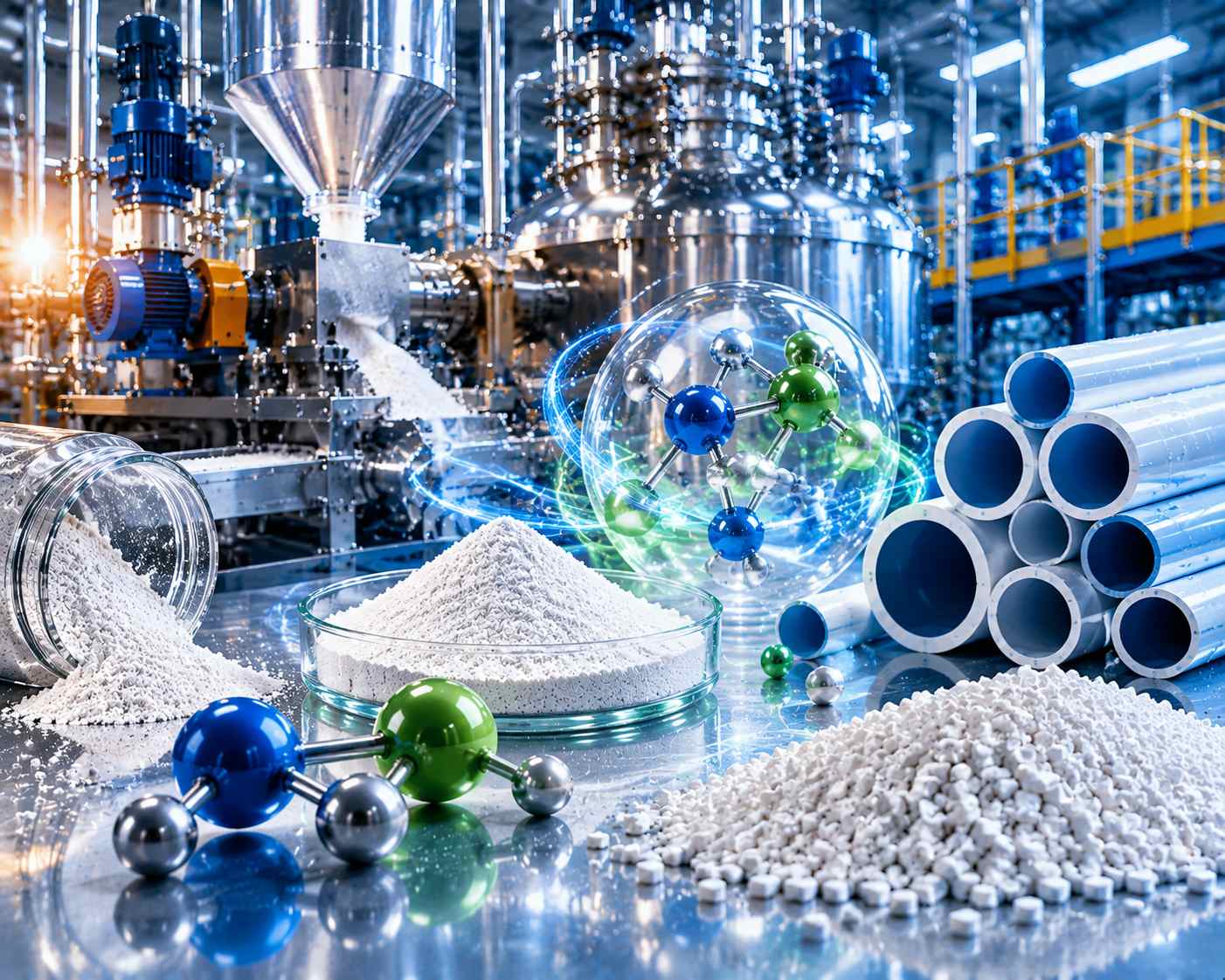
Los últimos avances en estabilizadores de calcio y zinc Los aceites lubricantes contienen múltiples capas de actividad, tal como lo describe el mecanismo de Frye-Horst, lo que supera significativamente la acción de los aditivos de un solo componente.
El jabón metálico actúa como un aditivo complejo en varias formas para proteger las cadenas de polímeros de la descomposición. La función principal del jabón de zinc es reemplazar los átomos inestables de cloruro de alilo de la cadena de PVC, evitando así el deterioro prematuro. El jabón de calcio en la fórmula del aditivo neutraliza el HCl liberado y reactiva el jabón de zinc con los cloruros metálicos del aceite usado, evitando así la formación de cloruro de zinc. El sistema previene la "quemadura de zinc", una falla repentina y grave causada por grandes cantidades de cloruro de zinc acumulado, que actúa como un catalizador muy potente. Se agregan estabilizadores auxiliares como β-dicetonas (por ejemplo, estearoilbenzoilmetano) para reducir la decoloración prematura y mejorar la estabilidad térmica al final de la vida útil.
Las investigaciones han demostrado que los sistemas de protección contra la corrosión a base de calcio y zinc, bien formulados, ofrecen una relación rendimiento-precio adecuada para su uso en tuberías, láminas y cables rígidos.
Superioridad funcional de los sistemas compuestos líquidos
Los estabilizadores líquidos de PVC ofrecen ventajas en el procesamiento de productos de PVC en comparación con los polvos sólidos tradicionales. Los materiales compuestos de PVC líquido, como Inteam CZ-001 y CZ-002, ofrecen mayor estabilidad y transparencia debido a los siguientes factores.
La dispersión molecular en la propia resina evita la refracción interfacial de la luz y proporciona una protección uniforme. Las propiedades autolubricantes de estas resinas también previenen la rotura por fusión y garantizan una buena fluidez en los procesos de extrusión y calandrado. A diferencia de las cargas, estas resinas no generan polvo, lo que facilita su manipulación, la medición precisa y la mezcla uniforme. Su alta compatibilidad con plastificantes las hace idóneas tanto para artículos duros y opacos como para productos blandos y transparentes y pastas plastificadas.
Dentro del equipo, estamos prestando especial atención a la estabilidad de alta viscosidad de estas nuevas formulaciones líquidas para evitar que precipiten o formen eflorescencias en la superficie del producto final.
Conclusión
La transición del PVC tradicional estabilizado con plomo a la tecnología de estabilizadores de calcio y zinc, respetuosa con el medio ambiente, es una herramienta fundamental para los fabricantes que desean mantener su competitividad en el mercado global, a la vez que producen productos de la más alta calidad. Estos aditivos para PVC están disponibles con mecanismos innovadores como el de Frye-Horst, así como en formatos líquidos compuestos para lograr una alta transparencia y una excelente estabilidad térmica y mecánica. Inteam, como proveedor líder de aditivos para PVC, se compromete a contribuir al desarrollo sostenible del mercado global de materiales plásticos bajo el Sistema de Gestión de Calidad ISO 9001:2015.
Preguntas frecuentes
P: ¿Cuáles son los principales tipos de estabilizadores de PVC que se utilizan en los envases aptos para alimentos?
A: Para aplicaciones con altos requisitos de higiene, se utilizan estabilizadores no tóxicos del grupo de los compuestos de calcio, zinc u organoestaño. Estos productos están libres de metales pesados, poseen una excelente transparencia y resistencia del color, y al mismo tiempo son inocuos para el ser humano.
P: ¿Cómo evita un estabilizador de PVC la reacción de cremallera durante el procesamiento?
A: Un estabilizador de PVC de alta calidad captura y neutraliza el cloruro de hidrógeno (HCl) gaseoso inmediatamente después de su liberación durante la deshidrocloración. Al eliminar de la mezcla de reacción el componente que actúa como catalizador de una mayor degradación y al desplazar los átomos de cloro insaturados de la cadena de PVC, el estabilizador interfiere con el mecanismo de reacción autocatalítica, previniendo así la decoloración y la fragilidad del PVC.
P: ¿Por qué se prefiere un estabilizador líquido de calcio y zinc a un polvo sólido para películas transparentes?
A: Los sistemas líquidos proporcionan la mejor dispersión a nivel molecular en la resina de PVC. Esto se traduce en una transparencia óptima, gracias a la mínima refracción de la luz, en comparación con los polvos sólidos. Además, los estabilizadores líquidos de Inteam, como el CZ-001, son fáciles de mezclar y no generan contaminación por polvo, a diferencia de las sales sólidas de metales pesados.
P: ¿Pueden los aditivos Inteam mejorar las propiedades mecánicas de las tuberías de PVC rígido?
A: Sí, Inteam ofrece soluciones integradas donde el estabilizador de PVC se utiliza en combinación con agentes de refuerzo y aditivos de procesamiento ACR. La combinación de estos componentes proporciona un aumento de la resistencia al impacto de 5 puntos porcentuales, y la contracción térmica longitudinal se reduce de -1,8 % a -1,6 %. De esta forma, se incrementa la estabilidad dimensional.
P: ¿Sigue siendo legal el uso del estabilizador de plomo de PVC tradicional en todos los proyectos de construcción a nivel mundial?
A: Actualmente, la atención se centra en la evolución de la normativa. En muchos países del mundo, el uso de PVC con plomo como estabilizador está prohibido en artículos como materiales de construcción, juguetes y dispositivos médicos, debido a su toxicidad. La mayoría de los fabricantes utilizan ahora estabilizadores sin plomo para el PVC por motivos medioambientales a nivel mundial. De esta forma, cumplen con los requisitos de la norma internacional EN-71-3 para juguetes seguros.