
Liquid Barium-Zinc Stabilizer for PVC Film
Time : Sep 10, 2026 tampilan : 166
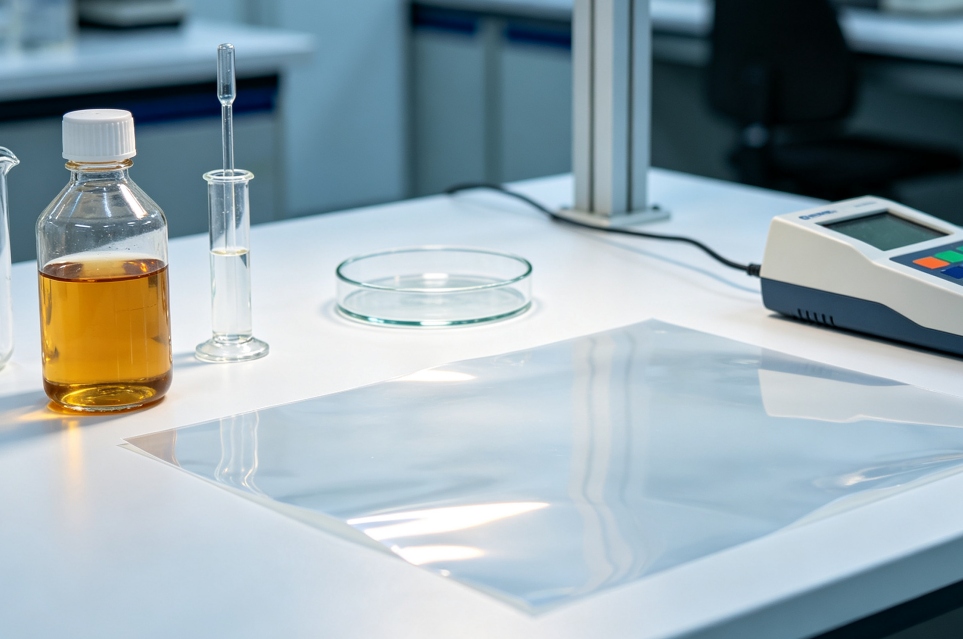
Flexible PVC film can look acceptable at the die and still fail after storage through haze, surface bloom, yellowing, or die deposits. A liquid mixed-metal system is useful only when it matches the film’s plasticizer, color, process temperature, and clarity target. This article explains how to evaluate BZ-001 for transparent and solid-color film without confusing stabilizer performance with moisture, lubricant, or process defects.
Why flexible PVC film exposes stabilizer weakness
PVC film gives formulation problems very little room to hide. Heat degradation shifts color, plasticizer compatibility affects surface feel, and lubricant imbalance can create haze or die buildup. A film producer therefore needs a stabilizer decision that reads color, clarity, processing smoothness, and stored appearance together.
Heat and shear drive early color loss
A Stabilisator panas PVC must protect the compound while resin, plasticizer, pigments, and additives are exposed to extrusion or calendering heat. Early yellowing, scorched particles, black spots, and rising deposits often point to a heat-history problem, especially when defects increase after longer residence time.
Surface bloom changes the film after production
Storage defects can tell a different story from line-exit defects. A film that is clear at winding but hazy after conditioning may be showing exudation, lubricant migration, plasticizer mismatch, or insufficient long-term stability. The trial must include stored samples, not only fresh film.
Where BZ-001 fits in a film formulation
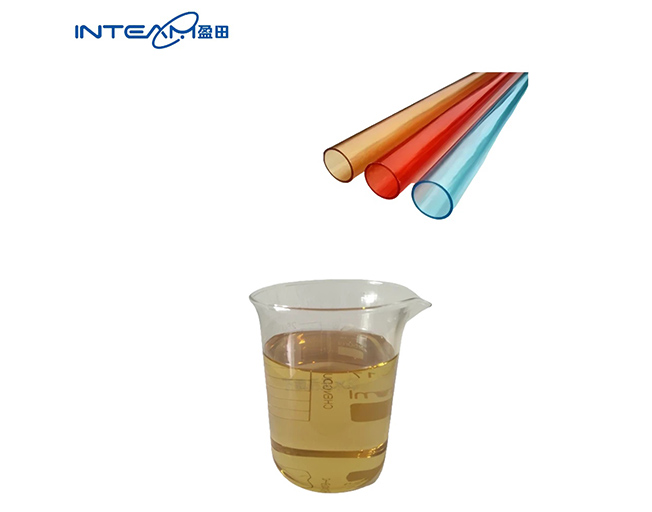
When a processor needs a liquid system for flexible or semi-rigid film, Inteam BZ-001 gives the trial a defined starting point. This stabilisator seng barium is a barium-zinc composite liquid PVC heat stabilizer based on an organic complex of low-carbon-chain barium-zinc fatty acid salts. It is a light-yellow to dark-red transparent liquid without precipitation, with a specific gravity of 0.9 +/- 0.05.
BZ-001 is documented for flexible and semi-rigid transparent or solid-color films and sheets, and it can also be used for flexible and semi-rigid transparent or solid-color pipes. For film production, the most relevant properties are transparency, initial color performance, heat resistance, resistance to surface exudation, self-lubricating behavior, weather resistance, and long-term heat stability.
Film concern | BZ-001 evidence | Trial confirmation |
Line-exit clarity | Excellent transparency and initial color performance | Haze, color, gloss, and speck inspection |
Heat exposure | Good heat resistance and long-term heat stability | Residence-time and heat-aging comparison |
Surface stability | Resistensi terhadap eksudasi permukaan | Conditioned samples checked for bloom or tack |
Processing smoothness | Self-lubricating behavior with no screw, mold, or roller sticking | Torque, die deposits, roll release, and downtime |
Starting range | 2.5-3 PHR for flexible transparent or light-color products | Low, midpoint, and high-point trials in the same recipe |
Trial design for transparent and colored film
A useful BZ-001 evaluation keeps the whole film system stable while the stabilizer level changes. Use the same PVC resin, plasticizer, pigment, filler, lubricant, antioxidant, mixing order, temperature profile, die condition, cooling, and winding tension. This prevents a better-looking batch from being credited to the stabilizer when another variable changed at the same time.
Set dosage by film color and rigidity
The BZ-001 sheet gives different dosage ranges by film type. Flexible transparent and flexible light-colored products start at 2.5-3 PHR, while flexible dark-colored products use 2.0-2.5 PHR. Semi-rigid transparent and semi-rigid light-colored products use 3-4 PHR, and semi-rigid dark-colored products use 2.5-3.5 PHR.
Keep the plasticizer package visible
Plasticizer level changes the stabilizer’s working environment. The reference formula uses PVC 100, plasticizer according to hardness, BZ-001 at 2.5-3.0, lubricant as needed, antioxidant at 0.3-0.5, and extrusion or calendering as the applicable process. Treat this as a reference window rather than a universal finished recipe.
- Label every trial with resin, plasticizer PHR, pigment, filler, lubricant, antioxidant, and BZ-001 loading.
- Record temperature zones, screw or roll speed, residence time, die or roll condition, cooling, and winding tension.
- Inspect line-exit film for haze, color, specks, bubbles, odor, plate-out, streaks, and blocking.
- Condition retained film samples before judging bloom, tack, renewed haze, color shift, and surface feel.
How to interpret common film defects
Defect timing should guide the next change. Yellowing that grows with residence time supports a heat-stability review. Cloudiness that appears immediately may involve dispersion, moisture, air, die cleanliness, or resin quality. Haze that appears after storage points more strongly toward compatibility, migration, or long-term formulation balance.
This distinction avoids wasteful dosage changes. If all trial points show bubbles, investigate moisture and venting before increasing stabilizer. If the best line-exit sample later blooms, review plasticizer, lubricant, and stabilizer compatibility. If only high-temperature or long-residence samples darken, the process window and stabilizer loading both matter.
Packaging, compliance, and purchasing checks
A production purchase should connect the approved film sample with grade identity, documents, storage, and service support. BZ-001 is supplied in 180 kg barrels and should be stored in a cool, dry, well-ventilated place. The Stabilisator cairan PVC category also includes related Ca-Zn, Ba-Zn, K-Zn, and tin liquid systems, so the purchase brief should state that the approved grade is BZ-001 unless a replacement trial is requested.
Compliance must be checked at the grade and destination level. BZ-001 is documented with PAHs content below 5 ppm, but the buyer should confirm current SDS, technical data, market restrictions, and customer limits before scaling. It is best used within six months after leaving the factory, so stock rotation belongs in the purchasing decision.
The practical approval decision
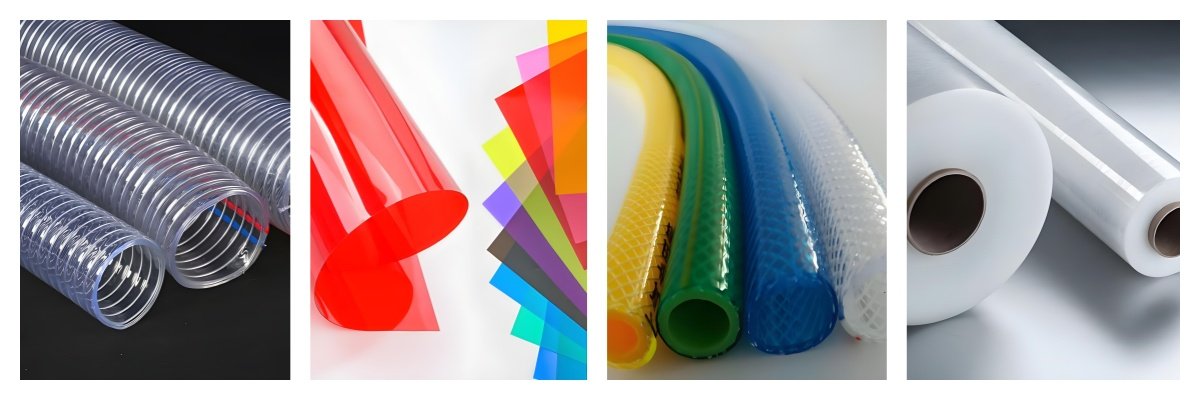
Approve BZ-001 when the same formulation meets line-exit clarity, heat stability, surface quality, stored appearance, and processing targets across repeat trials. The decision should preserve the exact dosage, film color, hardness, plasticizer package, process window, retained samples, and acceptance limits so production can repeat the result.
For sample matching, send your film trial details with resin type, plasticizer PHR, film color, hardness target, process, defects, destination market, and expected volume.
Pertanyaan yang Sering Diajukan (FAQ)
Is BZ-001 only for transparent PVC film?
No. BZ-001 is documented for flexible and semi-rigid transparent or solid-color films and sheets, and also for transparent or solid-color flexible and semi-rigid pipes. The trial should still match the exact product and color.
What dosage should a flexible transparent film trial use?
For flexible transparent and flexible light-colored products, the documented BZ-001 range is 2.5-3 PHR. Test controlled points inside that range before approving the commercial dosage.
Can a barium-zinc stabilizer solve all PVC film haze?
No. Stabilization is only one cause area. Moisture, air, resin quality, plasticizer compatibility, lubricant balance, die condition, cooling, and storage conditions can all affect haze, bloom, and surface feel.
When should BZ-001 be compared with BZ-002?
Compare them when the film shifts from transparent to opaque or when the buyer needs a solid-color flexible or semi-rigid product window. Keep the recipe and process constant so the grade comparison stays fair.
What information helps Inteam recommend a film stabilizer?
Send the film type, thickness, color, hardness target, resin, plasticizer level, filler, pigment, lubricant, process method, temperature profile, current defects, storage requirement, destination market, and annual demand.