

How to Optimize the PVC Stabilizer Manufacturing Process for Better Results
Time : Jun 18, 2026 View : 989
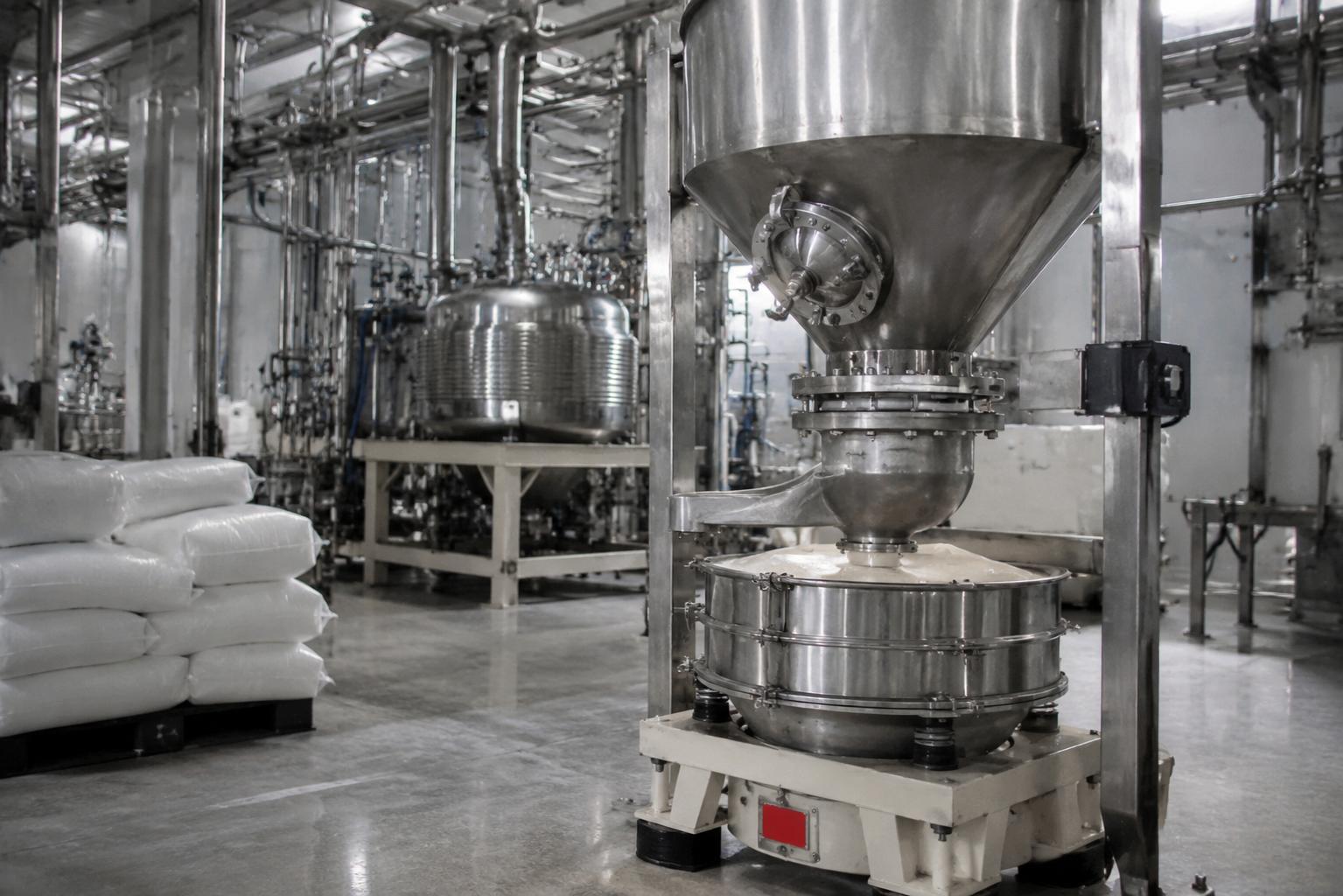
PVC (Polyvinyl chloride) is a widely used plastic material that is extremely versatile and is used in a wide range of applications, including construction, medical tubing, food packaging, automotive components, and many other products for consumer and industrial use. The PVC polymer is a heat-sensitive thermoplastic, and it is prone to thermal degradation when processed at high temperatures. In particular, PVC starts to undergo dehydrochlorination at 120–130°C; its common processing temperature ranges from 160°C to 220°C, where thermal degradation will be drastically accelerated, with the release of hydrogen chloride (HCl), a corrosive material that can cause discoloration, brittleness, and deterioration of mechanical properties in PVC. In order to achieve the required appearance and mechanical properties of PVC, it is necessary to use a stabilizer.
Heat stabilizers are essential for PVC processing. By neutralizing the HCl produced during thermal degradation, replacing unstable chlorine atoms, and preventing oxidative degradation risks, newly developed production processes for PVC stabilizers target optimal color preservation as well as long-term stability. With growing environmental requirements, the PVC-processing industry has eliminated the application of toxic lead compounds over the past decades. For more than 10 years, calcium-zinc stabilizers have been recognized as the benchmark across the PVC-processing industry thanks to their non-toxicity, odorlessness, and favorable processing characteristics.
What Defines a High-Performance PVC Stabilizer Manufacturing Process?
Understanding the Chemical Mechanism: From HCl Scavenging to Chlorine Displacement
A high-performance stabilizer must neutralize HCl and replace labile chlorine atoms on the PVC polymer chain to block the self-catalyzing “zipper reaction”. Calcium-zinc stabilizers work through an efficient dual-path mechanism: zinc carboxylates first react with allyl chloride to form intermediate metal chlorides, then calcium salts absorb released HCl to regenerate zinc soaps. This dual reaction prevents rapid PVC degradation and the generation of conjugated polyenes, the root cause of gradual discoloration ranging from pale yellow, orange, red,to dark brown and eventually black.
The stabilization mechanism of calcium-zinc composite blends is critical for high-precision films, medical tubing, and high-performance extrusion products, all of which demand stable short-term processability and long-term service performance of finished goods. Controlling the formulation ratio of composite blends enables precise regulation of stabilizer performance.
Liquid vs. Solid Forms: Choosing the Right Physical State for Your Process
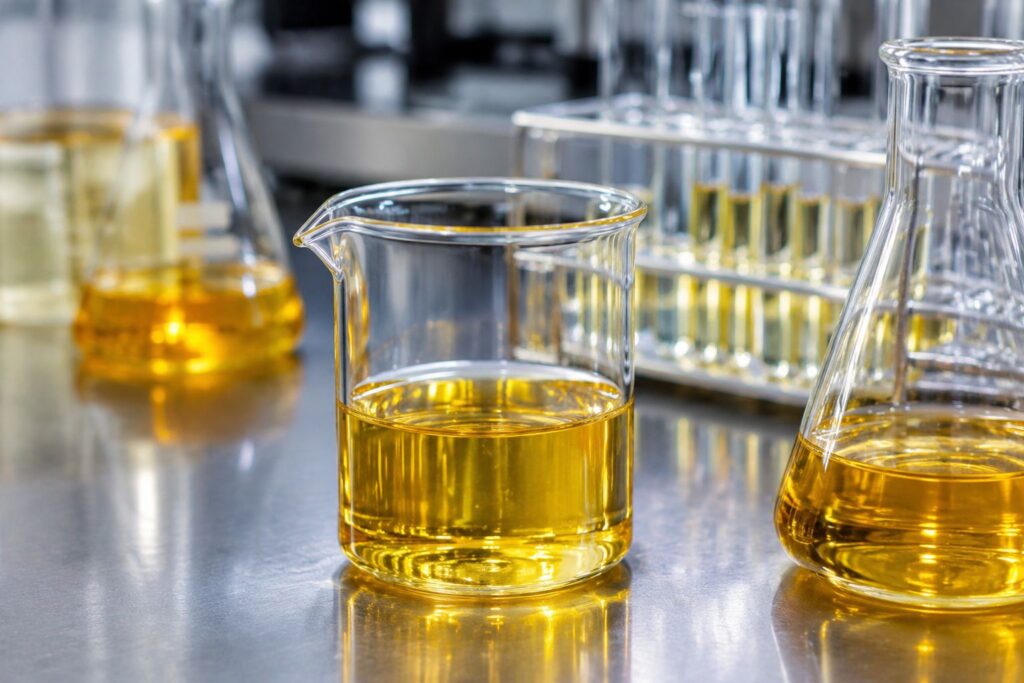
Liquid PVC stabilizers feature superior traits, including excellent dispersion, intensive molecular interaction with PVC, outstanding transparency, and convenient operation. Their metering accuracy is controlled within several percentage points during feeding, generates no dust, and effectively avoids die buildup or zinc scorching during calendering or extrusion.
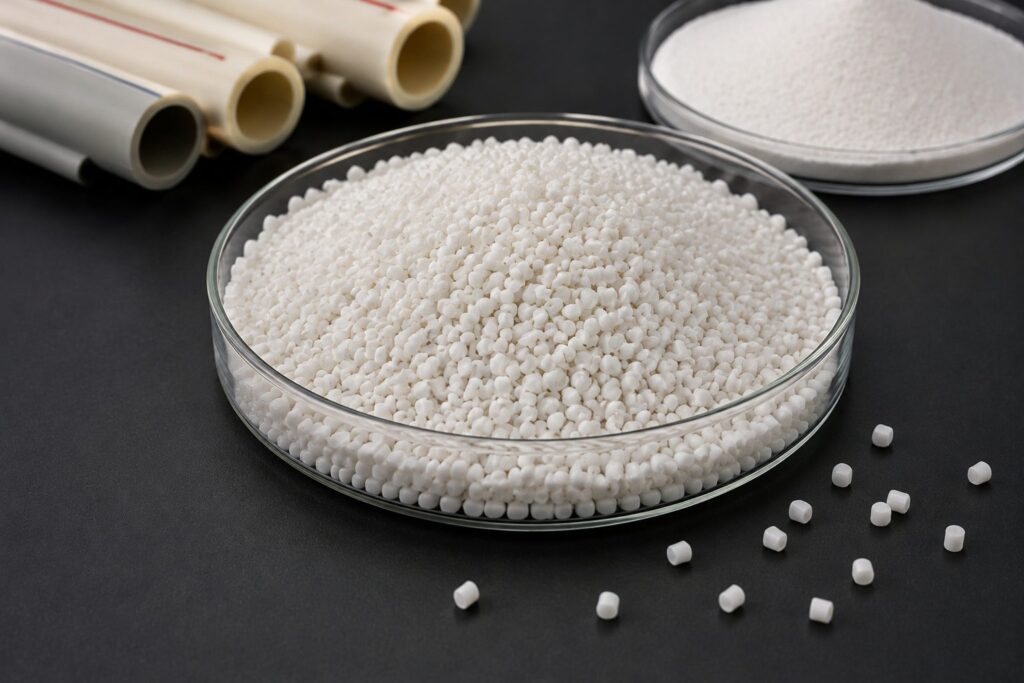
Most monocomponent solid PVC stabilizers require higher addition dosage and extra auxiliary lubricants in most formulas, while compound solid stabilizers have stable storage performance with integrated lubricants. For high-throughput manufacturers running fast-cycle production lines, liquid calcium-zinc stabilizers deliver superior finished product quality and are particularly ideal for high-transparency and flexible PVC production.
Why Is Process Optimization Vital for Your PVC Stabilizer Success?
Overcoming Heat Sensitivity and Thermal Degradation Bottlenecks
PVC features inherent heat sensitivity and a low glass transition temperature; hence, stabilizer formulation needs targeted optimization. High-temperature processing (160–220°C) requires precise dosing, uniform mixing and strict temperature control to avoid uneven degradation, color shift and mechanical property failure. Insufficient stabilization or improper processing parameters lead to premature failure of PVC products, rising waste rate, and unplanned equipment downtime.
An optimized PVC stabilizer manufacturing process solves the above challenges by: Achieving uniform distribution of stabilizers inside the polymer matrix; Providing sufficient HCl scavenging capacity throughout the whole processing cycle; Preventing localized overheating that accelerates dehydrochlorination; Maintaining stable melt viscosity and melt flow properties for extrusion and calendering.
Enhancing Long-Term Stability for Complex Applications
Long-term stability is critical for structural PVC products such as construction profiles, wire insulation, and medical tubing. While initial color retention guarantees surface appearance quality, residual stability preserves mechanical integrity against prolonged heat, UV radiation, and mechanical load. Multi-component formulas combining calcium-zinc stabilizers with auxiliary stabilizers including phosphites, β-diketones, and epoxy compounds improve both initial and residual stability. This formulation design restrains early degradation during processing and ensures long-term reliability of end products.
How Can You Optimize the Formulation to Better Stabilize Your PVC Products?
Synergistic Effects: Leveraging Auxiliary Stabilizers and Metal Soaps
Auxiliary stabilizers such as phosphites, β-diketones, and epoxy compounds can be compounded into calcium-zinc formulas. Epoxy compounds and β-diketones help neutralize residual HCl, while phosphites exert antioxidant effects and improve color retention,suppress oxidative degradation, and protect PVC molecular chains. Properly designed multi-component stabilizer systems generate synergistic effects between primary calcium-zinc salts and auxiliary additives, further boosting thermal stability, initial color retention and long-term mechanical performance. This synergistic matching is indispensable, especially for high-end transparent or flexible PVC formulations.
Balancing the “one-pack” System: Lubricants and Processing Aids
Balanced compounding of internal and external lubricants is essential to avoid die buildup, reduce torque fluctuations, and improve melt flow during extrusion and calendering. Internal lubricants penetrate polymer chains to lower inter-molecular friction, while external lubricants form a protective interfacial film between PVC melt and processing equipment. Reasonable lubrication matching can lift production efficiency by 15–30%, cut energy consumption by 10–20%, and minimize surface defects, plate-out and zinc scorching.
How to Troubleshoot Common Manufacturing Issues Using Advanced Stabilizers
Eliminating Discoloration, Scorching, and “zinc scorching.“
Material discoloration or blackening originates from insufficient HCl absorption or excessive mechanical shear. Adoption of liquid stabilizers together with matched lubrication prevents zinc scorching and maintains consistent color across full production batches. Targeted control over stabilizer dosage, processing temperature, and mechanical shear achieves optimal production results.
Solving Precipitation and Migration Problems in Transparent Products
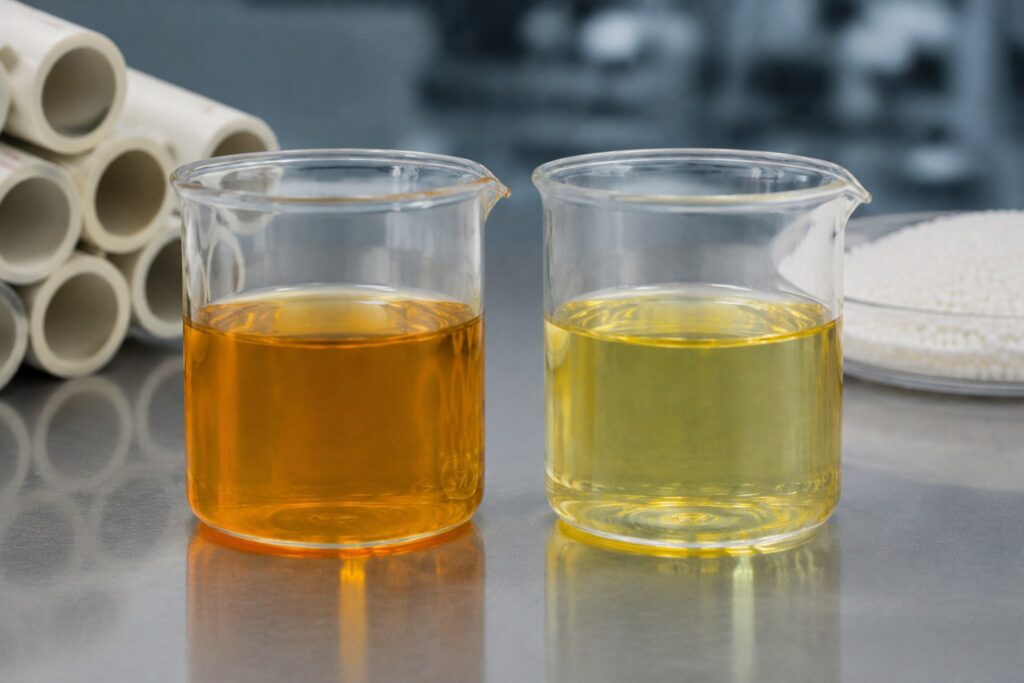
Transparent PVC requires high-compatibility stabilizers to prevent blooming and haze. Liquid calcium-zinc stabilizers minimize additive precipitation and migration to maintain optical clarity during processing and storage. Adjusting the proportion of metal soaps, auxiliary stabilizers, and plasticizers is key to uniform dispersion and permanent transparency for high-clarity applications including medical tubing, flexible films, and packaging materials.
What Are the Key Performance Indicators (KPIs) for a Stabilized PVC Melt?
Core testing indicators for qualified stabilized PVC include initial color retention, transparency, and thermal stability. Well-designed one-pack stabilizer formulas inhibit early-stage discoloration during processing and retain stable material properties throughout the product service life.
Compliance and Environmental Safety Standards (REACH & RoHS)
All calcium-zinc stabilizer grades fully comply with global environmental regulations. They contain ultra-low VOCs content and zero heavy metals or toxic solvents, qualifying them for food-contact products, medical devices, and various consumer goods. Full regulatory compliance of the branded products safeguards brand credibility across global export markets.
Conclusion
Strategic optimization of PVC stabilizer manufacturing processes improves production efficiency, cuts production costs and enhances finished product quality. Eco-friendly multi-functional calcium-zinc-based stabilizers from Inteam simplify PVC production formulation, stabilize product quality, and satisfy international export regulatory requirements. Future innovation of PVC stabilization systems will rely on additive engineering, nanotechnology, and molecular design to develop high-efficiency, high-performance, and eco-compatible stabilizer solutions.
FAQ
Q: How can Inteam’s calcium-zinc stabilizer improve the stability of PVC?
A: Inteam’s calcium-zinc stabilizer absorbs HCl, replaces unstable chlorine atoms and inhibits oxidation reactions, securing long-term color stability and thermal stability of PVC products.
Q: What are the advantages of using liquid instead of solid PVC stabilizers from Inteam?
A:Liquid PVC stabilizer formulas deliver superior dispersion effect, better transparency, and easier metering operation, as well as effective prevention against die buildup. Therefore, liquid grades are widely applied in transparent and flexible PVC production.
Q: How does the PVC stabilizer manufacturing process affect PVC product quality?
A: A well-regulated production process guarantees uniform dispersion of stabilizers, sufficient HCl scavenging capacity and balanced lubrication, thus avoiding color defects, zinc scorching and unstable mechanical properties of final PVC products.
Q:Why is auxiliary stabilizer synergy important in Inteam products?
A: Auxiliary stabilizers, including phosphites and β-diketones, complement the core functions of primary calcium-zinc stabilizers to restrain oxidative degradation and improve both short-term initial stability and long-term thermal stability.
Q:What are the important KPIs to monitor to ensure that PVC has stabilized?
A: Initial color retention, transparency, melt flow characteristics, and compliance with REACH & RoHS environmental safety regulations.