

Liquid PVC Stabilizer vs Solid PVC Stabilizer: Why Liquid Wins in Transparency
Time : Apr 29, 2026 View : 1,402

Have you ever picked up a clear plastic blister pack or a medical IV tube and noticed how perfectly transparent it is? It looks like glass but bends easily in your hands. Making plastic that clear is actually a massive headache for factory engineers. The raw material, polyvinyl chloride, naturally wants to turn yellow or even black when you heat it up to melt it. To stop this burning, factories add protective chemicals to the mix. For decades, workers simply dumped bags of white powders into high-speed mixers to do this job. But recently, the industry has noticed a huge shift. High-end manufacturers are moving away from those traditional powders and switching to fluids. They do this because when you want glass-like clarity, the physical state of your chemical matters just as much as what is in it. Let’s look closely at why this happens and how it changes production.
The Hidden Battle Inside Clear Plastics
Before we can appreciate why one additive works better than another, we have to look at what happens when plastic actually melts. It is not just about heating powder until it turns into a thick liquid; it involves a complex chemical dance where light needs to pass through without hitting any microscopic roadblocks.
How Light Scattering Determines Clarity
When you examine a plastic sample against a light source, you expect the rays to proceed directly through the substance. If those rays encounter internal elements and deflect in various directions, the result appears as a foggy or opaque appearance. This deflection is known as scattering. To enhance PVC transparency, it becomes necessary to remove all potential internal sources that could scatter the light. Pure resin allows light to pass with relative ease. The issue typically arises upon adding other substances to the formula, which help the plastic withstand high temperatures in equipment. If these substances fail to integrate fully into the resin structure, they create small physical hindrances that obstruct light paths, thus spoiling the desired clear outcome despite prior efforts.
Why Conventional Solid Powders Cause Turbidity
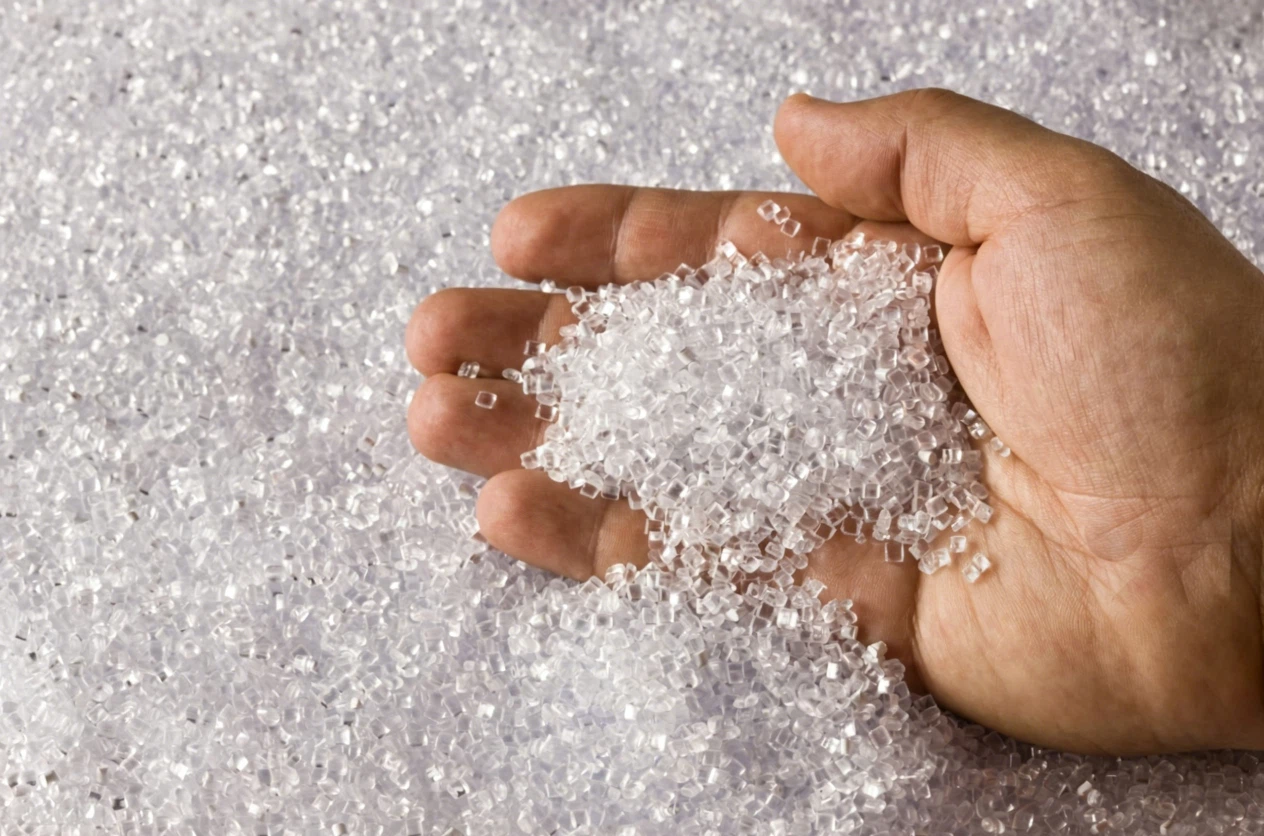
This brings us to the main problem with a conventional solid PVC stabilizer. Traditional additives, like lead flakes or metallic soaps made from calcium and stearic acid, are physical particles. When you mix them into the hot, thick plastic melt, they do not always dissolve completely. They simply have limited compatibility with the resin. Even at 190°C, microscopic clusters of these solids can remain floating in the mixture. When you use large amounts of these dry chemicals—say, 3 or 4 parts per hundred resin—those undissolved clusters act like tiny white mirrors. They scatter light aggressively, dropping light transmission and giving the product a dull look. However, it is important to note that high-quality solid stabilizers engineered for nano-level dispersion can also achieve excellent clarity without haze.
The Chemical Edge of Fluid Additives
Switching your factory from dry powders to wet additives changes the entire chemical environment inside your mixing tank. Instead of forcing solid rocks to melt into a thick soup, you are blending compatible fluids together. This fundamentally alters how the final product reacts to incoming light and extreme machine heat.
Reaching Molecular-Level Dispersion
The biggest advantage of a liquid PVC stabilizer is how it mixes. Because it is already in a fluid state, it blends into the melted plastic at a molecular level. Assuming complete compatibility, there are no solid chunks left behind to block the light. (It should be noted, however, that if a liquid additive suffers from phase separation or emulsification issues, it will still cause the final product to exceed acceptable haze limits.) The molecules of the additive weave themselves perfectly between the polymer chains. On top of that, these fluid chemicals generally have smaller molecular linear lengths compared to bulky metallic soaps. This means they naturally scatter less light. When the light hits a product made with a high-quality transparent PVC stabilizer, it passes right through the perfectly mixed molecular structure. You get that brilliant, glass-like finish that customers expect when they buy premium food packaging or clear medical tubing. The material stays totally clear from the inside out.
Stopping the Yellowing Effect Before It Starts
Clarity is not just about being see-through; it is also about color. PVC is highly sensitive to heat. While it begins to soften around 120°C, it starts to thermally decompose around 160°C to 170°C, releasing acidic gas that triggers a rapid “zipper reaction”. This causes the plastic to turn pale yellow, then orange, and eventually black. Since you process plastic up to 220°C, stopping this reaction is critical. A fluid coats the resin particles much more evenly than dry dust ever could. This massive surface area contact allows the chemical to capture and neutralize that acidic gas instantly. By stopping the degradation the second it starts, a liquid composite stabilizer preserves the pristine initial color of the plastic. It prevents that ugly yellow tint that often plagues clear packaging, keeping the product looking clean and fresh.
Solving Common Factory Floor Headaches
Beyond just making things look pretty on the store shelf, moving away from dry chemicals solves several annoying problems that machine operators face every day on the factory floor. However, it is vital to understand that transitioning from solid powders to liquids is not a simple swap and requires entirely different feeding equipment. While powder processing relies on loss-in-weight feeders, liquid systems necessitate the installation of precision metering pumps, spray distribution systems, anti-drip mechanisms, and closed liquid feeding lines. Once this required machinery is properly integrated, the physical nature of fluids fixes issues that have bothered plastic extrusion and calendering plants for decades without needing expensive machine upgrades.
Beating the Blooming Effect
Have you ever seen a clear plastic hose develop a weird white powdery film on the outside after sitting in a warehouse for a few weeks? That is called blooming. It happens when small molecules migrate and exceed their solubility limit within the PVC matrix over time, rather than just being a result of poor initial mixing. Because many highly compatible fluids have superior solubility with the resin, they stay locked inside the plastic matrix permanently. You can store your clear products for months, and they will not develop that chalky white surface. This is a massive relief for manufacturers who produce large batches of clear goods and need them to look flawless when they finally ship to the end customer.
Built-in Lubrication and Better Flow
Many factory managers do not realize that fluid additives act as a natural grease for the hot plastic. In the plastics industry, we talk about internal and external friction. Solid powders often require you to add extra lubricants to keep the plastic moving. Fluid options, however, slip right between the polymer chains, reducing the internal friction of the melt. This drops the melt viscosity and helps the material slide smoothly through the metal die. It reduces melt breakage and stops the material from sticking and burning. Optimizing this flow can lead to noticeable improvements in production speed and reductions in machine energy use, depending entirely on your specific equipment and formulation. The material just flows more easily, giving you a smoother surface.
Choosing the Right Chemistry for Your Production
One might assume that all transparent items demand identical chemical compositions, yet the truth proves more nuanced. Variations in extruder designs, temperature controls, and intended uses require aligning your particular production process with an appropriate liquid formulation to optimize outcomes.
Matching the Formula to the Application
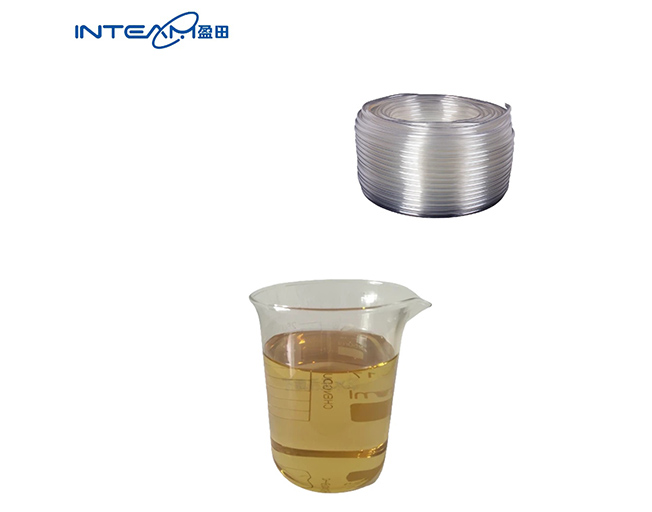
If you are making soft, flexible tubing, advertising films, or using plasticized pastes, maintaining a stable viscosity is critical. A heavy-duty fluid option, like a barium zinc stabilizer, works wonderfully here. It keeps the paste smooth while providing excellent heat protection and long-term weather resistance for outdoor use. However, it is crucial to note that barium-based stabilizers are toxic. They must be strictly limited to industrial applications and are absolutely prohibited for use in food-contact materials or medical devices. If you make rigid clear sheets or food-grade blister packs, you need something non-toxic. This is where an eco-friendly liquid calcium zinc stabilizer truly shines. It gives you the safety profile you need for direct food contact without sacrificing any PVC stabilizer transparency. The key is looking at what your final product has to endure and picking the chemical that naturally resists those specific stresses.
Partnering for Perfect Results
Getting the chemistry right takes trial and error. You cannot just guess dosages, especially with clear products where every mistake is visible. At Inteam, we focus heavily on the research and manufacturing of advanced polymer additives. We know exactly how to balance these complex formulations to help you hit your clarity targets without breaking your budget. If you are struggling with cloudy products, yellowing, or dust issues on your factory floor, you can explore our full range of PVC stabilisers. Better yet, tell us about your specific extrusion machine and your material recipe. Just contact us directly today, and our technical lab team will help you find the exact fluid additive to make your plastic totally clear and strong.
FAQs
Q: Why is a liquid PVC stabilizer better for clear plastics?
A: It disperses at a molecular level, preventing undissolved particles from scattering light and ruining the clarity of the plastic.
Q: Does a solid PVC stabilizer cause cloudy products?
A: Not necessarily. Cloudiness depends on the additive’s dispersion, compatibility with the resin, and particle size, rather than just its solid or liquid state.
Q: How can I improve PVC transparency easily?
A: Switch to a liquid composite stabilizer. It mixes perfectly and prevents heat-induced yellowing during factory processing without leaving a haze.