
Barium-Zinc Stabilizer for PVC Foamed Leather
Time : Sep 03, 2026 Görüntüleme : 592
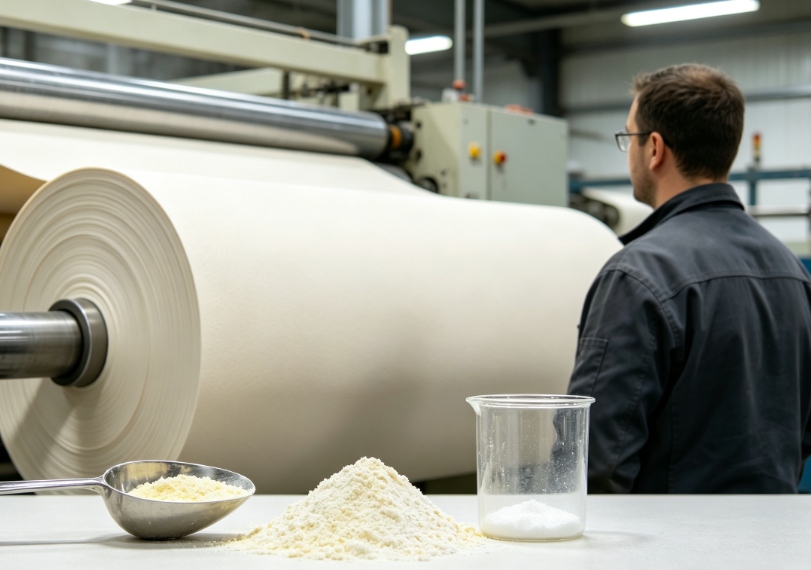
PVC foamed leather producers rarely lose margin because one additive is missing; they lose it when foam cells, surface feel, color, and oven-aging stability drift at the same time. A barium-zinc stabilizer for this application has to support heat resistance, foaming behavior, plasticizer compatibility, and bloom-and-bleed control in one trial plan, so the grade should be judged by qualified sheet output rather than by chemical type alone.
Foamed Leather Needs More Than Basic Heat Stability
Foamed PVC leather is a plasticized system that must gel, expand, and cure while the surface remains printable and clean. Heat stability is still the base requirement because PVC can discolor and release HCl fumes under processing heat and shear, but the buyer also has to watch cell density, surface bloom, tack, roller plate-out, and stored-roll appearance.
Barium-zinc chemistry is commonly considered for flexible PVC goods such as artificial leather, films, coated fabrics, and hoses. Buyers usually compare heat aging, initial color retention, foaming control, resistance to bloom and plasticizer bleed, and application fit, which makes this a production-validation question rather than a simple material definition.
Where YB-200 Fits in the Formula
YB-200 is an environmentally friendly barium-zinc PVC composite heat stabilizer developed for foamed PVC leather products. It is a light yellow to white powder with a specific gravity of 1.4 ± 0.1, based on barium fatty acid and zinc fatty acid organic complexes with heat-resistant additives, foaming regulators, and antioxidants.
The practical reason to consider YB-200 is its combined role in foam promotion, gelation, heat resistance, and bloom-and-bleed control. Inteam positions the grade for dense, full foam structure, stable molding, a flat finished surface, and no surface bloom (white hazy deposits) on the product surface, which are all directly relevant to artificial leather roll quality.
Foam structure and surface cleanliness
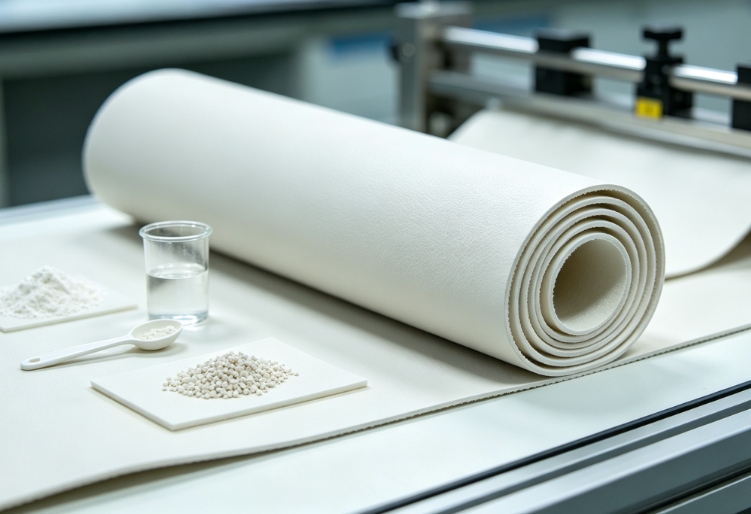
A useful foamed leather trial should connect stabilizer performance to the visible surface and the cross-section. Dense structure, full foam, flatness, gloss, and low surface bloom are stronger acceptance signals than an isolated oven color test because leather producers must laminate, emboss, print, or store the material after production.
Processing window and energy use
YB-200 also supports fluidity and plasticizing behavior and can reduce material processing temperature by 10 °C. That point should be verified on the actual line because lower temperature only creates value when foam expansion, color, and surface feel remain within specification.
A Practical Trial Range for YB-200
The starting range for YB-200 is 3-4 PHR per 100 PHR PVC resin. A sensible plant trial keeps resin, plasticizer hardness target, filler loading, foaming system, oven temperature, line speed, and cooling conditions stable while adjusting only the stabilizer and lubrication balance.
Trial item | Starting point | What to confirm |
YB-200 dosage | 3-4 PHR per 100 PHR PVC resin | Initial color retention, foam fullness, oven-aging stability, and surface bloom |
Epoxidized soybean oil | 2-5 PHR in the universal formula | Synergy with the stabilizer and plasticizer package |
CCR and CaCO3 | 0-30 PHR CCR and 30-60 PHR CaCO₃ | Density, hand feel, cost, and cell uniformity |
H-ST and PE-WAX | 0.3-0.6 PHR H-ST and 0.3-0.5 PHR PE-WAX | Release, torque, surface gloss, and exudation risk |
Soft formulas that contain chlorinated paraffin need extra attention: reduce stearic acid and PE wax, then test bloom-and-bleed performance. That adjustment affects printability, roll storage, and customer acceptance after shipment.
How Buyers Should Judge a Barium-Zinc System
A barium-zinc system should be judged through finished-product evidence because foam leather quality depends on interactions between resin, plasticizer, filler, lubricant, foaming agent, and oven profile. The most useful comparison is a side-by-side run against the current stabilizer under identical line settings.
For broader category review, buyers can map YB-200 beside other PVC stabilizer grades and then narrow the selection by application, not by the most familiar chemistry name. This keeps the decision focused on the actual foamed leather defect profile.
Production checks before scale-up
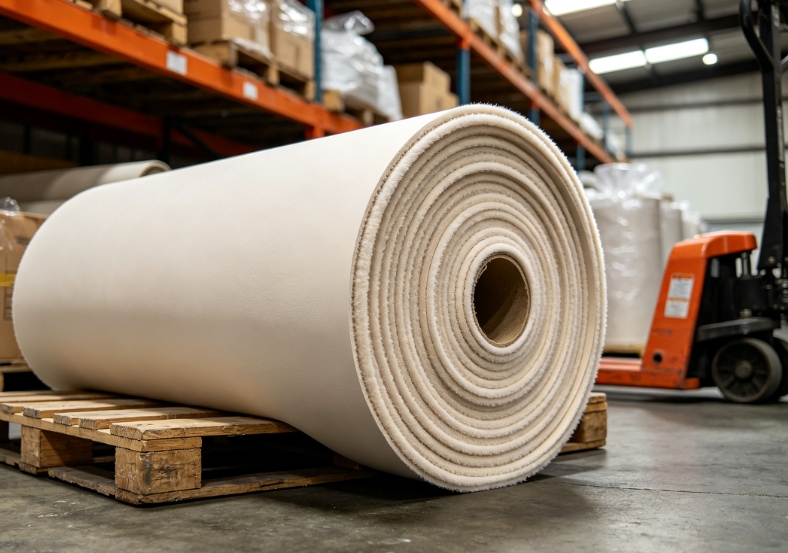
The first scale-up gate should cover processing behavior and stored-roll appearance. Material can look acceptable at the winder but show surface bloom, tack, or color drift after storage when plasticizer and lubricant compatibility is close to the edge.
- Record torque, melt pressure, oven temperature, line speed, and foam expansion during each run.
- Compare surface haze, surface bloom, roll blocking, embossing response, and cut-cell uniformity.
- Retain control samples from each batch for heat aging and storage checks.
- Review RoHS, REACH, PAHs, and Non-16P declarations against the buyer’s sales region.
Supplier support that matters
A buyer should ask the supplier to help interpret trial results rather than only send a dosage range. Inteam’s service content covers production guidance, cost control, quality improvement, product performance testing, and composition analysis, which fits this kind of formulation-sensitive application.
Link the Stabilizer Choice to the Product Line
YB-200 should be selected when the article’s main problem is foamed PVC leather, not every flexible PVC product. Inteam’s broader product portfolio also includes YB-300 for calendered films, leather, and rubber cloth, BZ-001 for transparent films and sheets, BZ-002 for solid-color films and sheets, and potassium-zinc or paste systems for other leather and wallpaper uses.
That product separation matters because moving a stabilizer across flexible applications can change clarity, foam response, exudation, and storage performance. A grade that works in transparent film is not automatically the best answer for foamed leather.
Summary for Foamed Leather Producers
The practical takeaway is that YB-200 deserves evaluation when a foamed PVC leather line needs heat stability, dense foam, clean surface appearance, and controlled bloom-and-bleed in one package. Start with 3-4 PHR, keep variables narrow, and judge by qualified roll output after processing and storage checks.
For a formulation review or a matched sample plan, share the PVC resin grade, hardness target, plasticizer package, filler level, foaming system, oven profile, and defect history when contacting us.
SSS
Is barium-zinc stabilizer suitable for PVC artificial leather?
Yes, barium-zinc stabilizer systems are commonly considered for flexible PVC goods such as artificial leather and coated fabrics. The exact grade still needs application testing because foamed leather has stricter foam, surface, and storage requirements than a simple flexible sheet.
What dosage should a YB-200 trial start with?
A YB-200 trial should start from 3-4 PHR per 100 PHR PVC resin. Buyers should adjust only after checking foam fullness, initial color retention, surface bloom, torque, and stored-roll behavior.
Why does exudation testing matter in foamed leather?
Exudation testing matters because migrated additives can create surface bloom, tack, poor printability, roll blocking, or surface defects. Softer formulas with chlorinated paraffin require special lubrication adjustment and direct bloom-and-bleed checks.
Can YB-200 replace a liquid barium-zinc stabilizer?
Not automatically. YB-200 is a powder barium-zinc composite heat stabilizer for foamed PVC leather, while liquid barium-zinc systems often serve films, sheets, coated fabrics, or transparent flexible PVC.
Which documents should buyers request before ordering?
Buyers should request the TDS, SDS (Safety Data Sheet), regulatory declarations, recommended dosage range, packing information, and trial guidance. For YB-200, also confirm 25-kg bag packaging, storage requirements, and expected use within one year.