

PVC Lubricant Product Types and Use
Time : Aug 27, 2026 Görüntüleme : 405
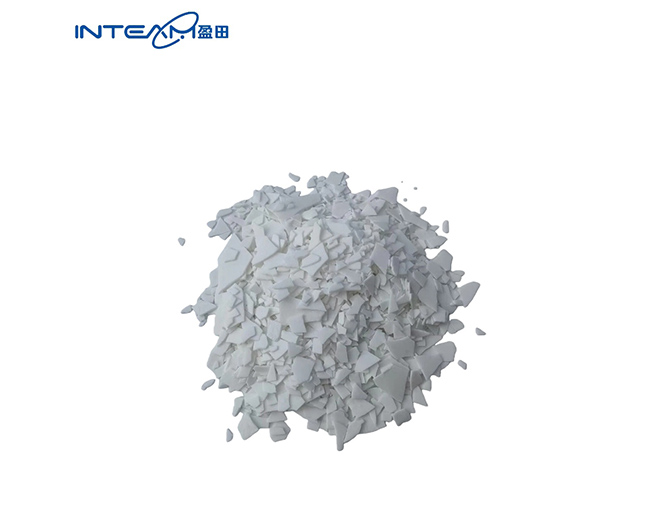
PVC lubricants control friction inside the compound and between the melt and processing equipment. A balanced system supports fusion, stable extrusion, clean release, and consistent surface quality. An incorrect balance may cause high torque, delayed plasticizing, die deposits, scorching, or poor pipe performance.
Why PVC Needs a Lubricant System
PVC generates considerable friction during mixing and extrusion. This friction increases processing load and builds heat among PVC particles, polymer chains, screws, barrels, and dies. A suitable PVC yağlayıcı reduces this resistance while enabling the compound to achieve the required degree of fusion.
PVC features a narrow processing stability window. Excessive heat and shear can trigger thermal degradation and release HCl, resulting in discoloration, scorching, acidic fumes and deteriorated mechanical properties. Lubricants mitigate frictional heat yet cannot substitute heat stabilizers.
Main PVC Lubricant Product Types
Internal Lubricants
Internal PVC lubricants exhibit relatively good compatibility with resin. They integrate into the compound and lower friction between polymer chains and fused PVC particles. This cuts melt viscosity and facilitates material flow through the die after fusion.
Fatty acid esters, partial glycerol esters and certain metal soaps deliver predominantly internal lubrication. Insufficient dosage leads to high melt viscosity and torque; over-dosage may impair melt strength. The dosage shall be adjusted according to pipe dimension, throughput and filler loading.
External Lubricants
External lubricants have low compatibility with PVC and migrate toward melt surfaces. They form a separating film between PVC and metal surfaces to mitigate adhesion on screws, barrels, dies and calibrators.
Polyethylene wax and paraffin wax are typical options. Proper external lubrication improves metal release and prevents local over-heating. Over-addition will delay fusion, reduce output, weaken weld lines or aggravate surface migration.
Combined Lubricants
Oxidized polyethylene waxes, ester waxes and selected metal stearates improve melt flow while delivering good metal release. The same lubricant may perform differently when combined with alternative resins, stabilizers or processing set-ups.
Lubricant type | Main effect | Typical contribution | Common applications |
Fatty acid esters | Internal or combined | Improve flow | Pipes, profiles, sheets |
Polyethylene wax | External | Improve metal release | Rigid pipes and fittings |
Oxidized PE wax | Combined | Balance flow and release | Filled compounds |
Paraffin wax | External | Limit adhesion | Rigid PVC extrusion |
How Lubricants Affect PVC Pipe Extrusion
Fusion and Plasticizing
PVC pipe compounds shall achieve proper fusion at the designated zone inside the extruder. Premature fusion raises torque and subjects the material to excessive shear. Delayed fusion causes inhomogeneous melt, rough pipe surfaces, and unsatisfactory mechanical performance.
External lubricants generally retard fusion, whereas internal lubricants reduce internal resistance of fused melt. Practical PVC boru yağlayıcı systems combine both functions based on extruder configuration and target output.
Higher lubricant loading does not guarantee better processability. Excessive external lubrication may make the compound slip along the screw without receiving sufficient shear for adequate fusion. Low torque under such circumstances signals under-fusion instead of higher production efficiency.
Torque, Pressure, and Die Deposits
Torque and melt pressure reflect compound processing behaviour. Torque spikes indicate inadequate lubrication, premature fusion, unstable feeding or built-up deposits. Abnormally low torque points to delayed fusion.
Do not address die-face deposits by simply adding wax without thorough troubleshooting. Deposits may consist of migrated-out lubricant, fillers, pigments, stabilizer fractions or degraded PVC. Operators shall inspect deposits and review melt temperature, pressure, dispersion and formulation compatibility prior to any formulation adjustment.
Pipe Surface and Structural Integrity
Lubrication governs surface smoothness, dimensional accuracy, impact resistance and overall structural integrity. Inadequate lubrication brings about drag marks, scorching and dimension fluctuation. Excessive migration results in dull surfaces or downstream accumulations.
Therefore, the optimal lubricant for PVC pipes is not the one delivering the lowest torque. It refers to a well-balanced lubricant system that ensures controllable fusion, stable extrusion, effective metal release, and finished pipe properties complying with relevant specifications.
How to Select and Test a Lubricant
Formulation evaluation comes first for lubricant selection. Resin K-value, stabilizer type, calcium carbonate content, processing aids, pigments, recycled materials, screw geometry and target output all influence lubrication requirements.
Buyers need to assess its chemical composition, physical form, melting range, viscosity, volatility and batch-to-batch consistency. Calcium-zinc, organotin and other stabilizer systems demand different lubricant balances. One-package stabilizers may already contain built-in lubricants.
During line trials, keep feed rate, screw speed, temperatures and cooling conditions constant. Record data as below:
Evaluation item | Record | Main purpose |
Fusion time | Seconds | Identify early or delayed fusion |
Torque | N·m or instrument units | Measure processing resistance |
Melt temperature | °C | Check shear heating and thermal risk |
Die pressure | bar or MPa | Evaluate flow stability |
Output | kg/h | Confirm production efficiency |
Cleaning interval | Operating hours | Track die deposit tendency |
Pipe dimensions | mm | Check diameter and wall consistency |
Stable processing parameters alone are insufficient. Finished pipes must pass dimensional, impact, hydrostatic pressure and other tests specified by applicable product standards.
Match the Lubricant to the Production Line
INTEAM conducts evaluation on PVC additive systems based on resin grade, stabilizer chemistry, processing equipment and end-product requirements. Buyers may share existing formulations, processing parameters, pipe specifications and production challenges to obtain targeted technical assessment.
Reach us before conducting direct one-to-one equivalent replacement. Controlled side-by-side comparison minimizes risks of resolving one defect while triggering new processing issues.
SSS
What is the difference between internal and external PVC lubricants?
Internal lubricants reduce internal friction within PVC compounds. External lubricants lower adhesion between PVC melt and metal equipment surfaces. Most pipe formulations require a balanced combination of both types.
Which lubricants are commonly used for PVC pipes?
Popular options include polyethylene wax, oxidized polyethylene wax, paraffin wax, fatty acid esters, stearic acid, and metal stearates. Proper selection depends on the full-set formulation.
Can polyethylene wax be used alone?
Polyethylene wax offers powerful external lubrication yet fails to supply sufficient internal lubrication. Over-dosage will retard fusion. Hence it shall only be applied as a component within a fully balanced lubricant system.
What are the signs of excessive lubrication?
Typical symptoms include delayed fusion, abnormally low torque, reduced throughput, weak weld lines, dull surface finish, unstable sizing and die deposits.
Does higher filler loading require more lubricant?
Higher filler loading alters friction and fusion characteristics, but this does not warrant automatic increase of lubricant dosage. Filler surface treatment, particle size, dispersion status, stabilizer chemistry and processing aid dosage also need comprehensive consideration.
| barium-zinc-stabilizer-for-pvc-foamed-leather | how-pvc-stabilizer-systems-control-color-stability