
Calcium Zinc Stabilizer for PVC Toys
Time : Oct 01, 2026 浏览次数:710
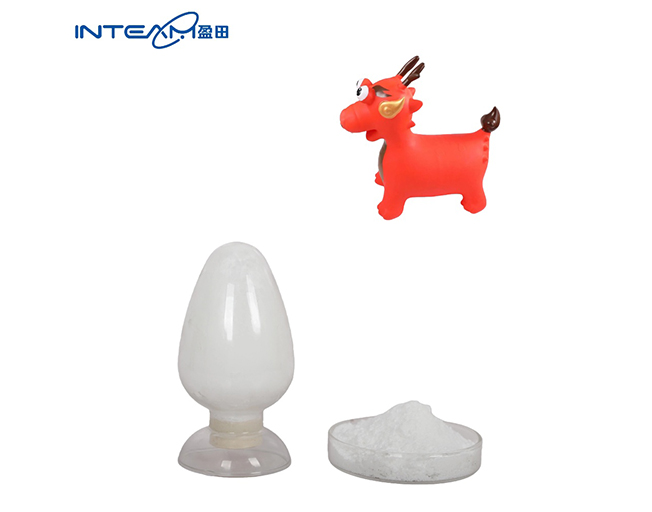
Toy-grade PVC compounds must be processed smoothly while keeping odor, color, and restricted-substance levels under control. For factories selling into mixed markets, the stabilizer system often makes a critical difference between a flexible toy compound processing cleanly and one that triggers customer complaints, scrap output or export compliance risks. This article explains how calcium-zinc stabilization fits toy-grade PVC and where Inteam YC319WJ is relevant.
Toy-Grade PVC Needs A Cleaner Stabilizer Path
PVC toys place high demands on both processing performance and material compliance responsibility. Flexible and semi-flexible toy components may suffer from odor, rough surface, color drift, brittleness or migration issues if the stabilizer-plasticizer system is poorly matched.
Inteam YC319WJ is commonly selected where lead-based stabilization fails to meet target-market requirements. YC319WJ is a calcium-zinc organic complex formulated with high-grade calcium fatty acid salts and zinc fatty acid salts, heat-resistant additives, together with primary and secondary antioxidants.
This solution is particularly valuable for downstream manufacturers exporting finished toys to regions with strict restricted-substance regulations. While price-oriented buyers in less-regulated local markets may still inquire about lead-based alternatives, toy-grade material selection should prioritize compliance performance before cost evaluation becomes decisive.
Processing Risks In PVC Toy Compounds
Odor and restricted substances
Toy products easily draw end-user complaints if formulation work fails to address thermal degradation, unsuitable plasticizers or heavy-metal risks at an early stage. Compliant with RoHS, REACH, PAHs and NP-16P requirements, Inteam YC319WJ delivers a responsible stabilizer solution for toy-grade applications.
Surface quality and color retention
Injection-molded toy parts require flawless surface appearance post-demolding and post-decoration. YC319WJ features outstanding initial color stability, long-term weather resistance and anti-yellowing performance for natural-color goods. It helps deliver smooth surfaces free of bubbles and silver streaks.
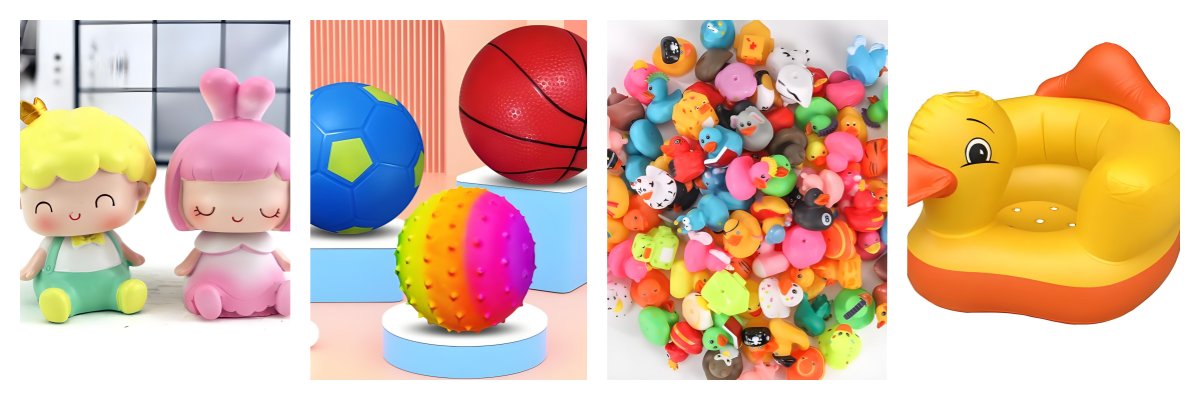
YC319WJ Fits Injection-Molded Toy Material
A well-formulated stabilizer package should guarantee proper gelation and melt flow without continuous troubleshooting of surface defects on production lines. Inteam YC319WJ provides favorable melt fluidity and easy gelation behavior. It enables rapid temperature rise during powder mixing with minimal dust emissions, and offers excellent resistance against high-temperature and high-shear conditions.
Surface defects are the most frequent failure modes for toy articles. Even dimensionally-qualified parts may become non-conforming due to black spots, yellow spots, shrinkage, sink marks, poor printability and paint peeling-off.
Formulation guidance for YC319WJ
Component | 剂量 | Key note for toy production |
PVC resin | 100 PHR | Baseline for injection-molding formulations |
填充物 | 25-50 PHR | Stabilizer and lubricant dosage shall be adjusted with increased filler loading |
YC319WJ | 3-5 PHR | Guarantees thermal stability, melt flow, color hold-up and surface quality |
加工辅助 | 1.5-2.5 PHR | Optimizes melt behaviour and final surface appearance |
Note: PHR refers to Parts Per Hundred of Resin.
Material Checks Before Scaling Production
Stabilizer selection shall be evaluated together with the full compound formulation. A calcium-zinc stabilizer system cannot offset defects caused by inferior plasticizers, pigments, fillers or improper processing conditions. Full validation of the complete formulation is strongly recommended before committing to mass-production deliveries:
- Confirm whether finished toys are targeted at markets requiring lead-free and phthalate-restricted materials.
- Carry out lab testing covering odor, surface smoothness, color stability, print performance and coating adhesion of the final formulation.
- Gradually increase stabilizer and lubricant addition when higher filler loading or longer melt residence time are expected.
- Keep raw materials dry and ensure homogeneous mixing to minimize bubbles, fish-eyes and color deviation.
Color And Decoration Requirements In Toy Parts
Molded toy components often go through pigment tinting, pad printing, spray coating and assembly. Non-plate-out stabilizer performance is critical for downstream decoration: wax migration, poor ink anchorage or paint delamination can cause dimensionally-acceptable molded parts to be rejected.
Natural-color and light-color toy compounds demand extra attention, as yellow discoloration is highly visible. Inteam YC319WJ addresses this pain point via robust initial color retention, anti-yellowing capacity, non-migration property, good printability and resistance to paint peeling-off.
Toy Part Acceptance Criteria | Practical Performance Target | Relevant Stabilizer-Related Factor |
Odor after molding | Mild and acceptable upon cooling | Suppressed thermal degradation and high-purity additive system |
Printed surface | Secure adhesion of ink or coating | Non-plate-out surface characteristic |
Light-color components | Minimal yellow shift | Initial color stability and anti-yellowing performance |
Decorative finish | Bubble-free, smooth surface | Optimized gelation, flow and dispersion |
Where Inteam Adds Practical Value
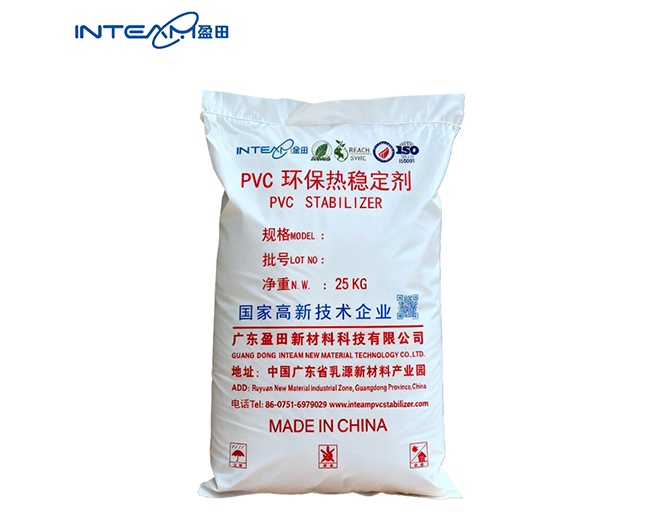
Toy manufacturers need a stabilizer supplier capable of formulation consultation, rather than merely supplying powder products. Inteam develops and manufactures PVC stabilizers in-house. Inteam YC319WJ is packed in 25 kg paper-plastic composite bags. For optimal performance, use the product within its one-year shelf-life when stored in a cool, dry and well-ventilated warehouse.
For broader product portfolio evaluation, customers may review Inteam full-range PVC additives, covering stabilizer grades for pipes, cables, profiles and sheets for multi-product plant set-ups.
Proper packaging and storage preserve trial-test performance. Original 25 kg paper-plastic composite packaging together with dry, ventilated storage ensure repeatable powder handling, dispersion and dosing from lab trials to full-scale batches.
Trial Signals For Toy Compound Approval
Material qualification for toy-grade PVC must combine regulatory compliance assessment with real-world processing behavior. Even samples passing initial visual inspection may fail later: post-molding odor buildup, yellowing of light-colored parts during storage or coating delamination after handling are common hidden risks.
A robust qualification workflow shall evaluate molded parts under startup, steady-state operation and equipment restart conditions. This approach helps distinguish stabilizer-rooted failures from issues arising from pigment dispersion, moisture ingress, plasticizer incompatibility or narrow processing-temperature window.
For factories serving both emerging-market and export-oriented customers, clear material routing is essential: export-bound toy orders shall adopt calcium-zinc compliant grades, while cost-driven non-toy PVC projects can be handled separately without mixing compliance requirements.
Final approval must include packaging and storage specifications. Moisture, partially-opened bags or improper warehouse stacking may cause inconsistent performance between lab trials and commercial production.
Summary
PVC toy manufacturing requires stabilizer selection that balances processability, surface finish, odor control and compliance for global sales channels. Inteam YC319WJ delivers a qualified calcium-zinc stabilizer solution for toy-grade PVC. In addition, customers can leverage Inteam professional technical services to fine-tune dosage, lubricant balance and filler loading according to target-market requirements.
Whether you are developing new formulations or troubleshooting existing challenges such as yellowing, surface defects and poor printing performance, share your formulation parameters, molding conditions and target-market requirements via Inteam’s contact channels. Our technical team will assess whether YC319WJ fits your application and discuss formulation adjustments for your upcoming trials.
常问问题
Is calcium-zinc stabilizer suitable for PVC toys?
A calcium-zinc stabilizer is an ideal lead-free alternative for toy-grade PVC. It provides better odour control and restricted-substance compliance compared with traditional lead-based stabilizer systems.
What dosage range is used for YC319WJ?
The typical dosage of YC319WJ is 3-5 PHR per 100 PHR of PVC resin. Lubricant levels should be adjusted based on filler content and processing equipment status.
Can one stabilizer solve all toy compound defects?
No single stabilizer can eliminate all potential defects. Plasticizer selection, filler quality, pigment grade, moisture content, mixing procedure and processing temperature all exert impact on odor, bubble formation, surface quality and color performance.
Why does toy PVC sometimes show yellow spots?
Yellow spots often stem from localized overheating, poor ingredient dispersion, extended melt residence time, insufficient thermal stability, or contamination from raw materials and processing equipment.
How should exporters view lead stabilizers in toy PVC?
Exporters for toy articles subject to overseas market access should exercise caution with lead-containing stabilizers, as they may trigger non-compliance risks where lead-free material declarations are mandatory.