

PVC Pipe Stabilizer for Export and Local Markets
Time : Sep 24, 2026 浏览量:897
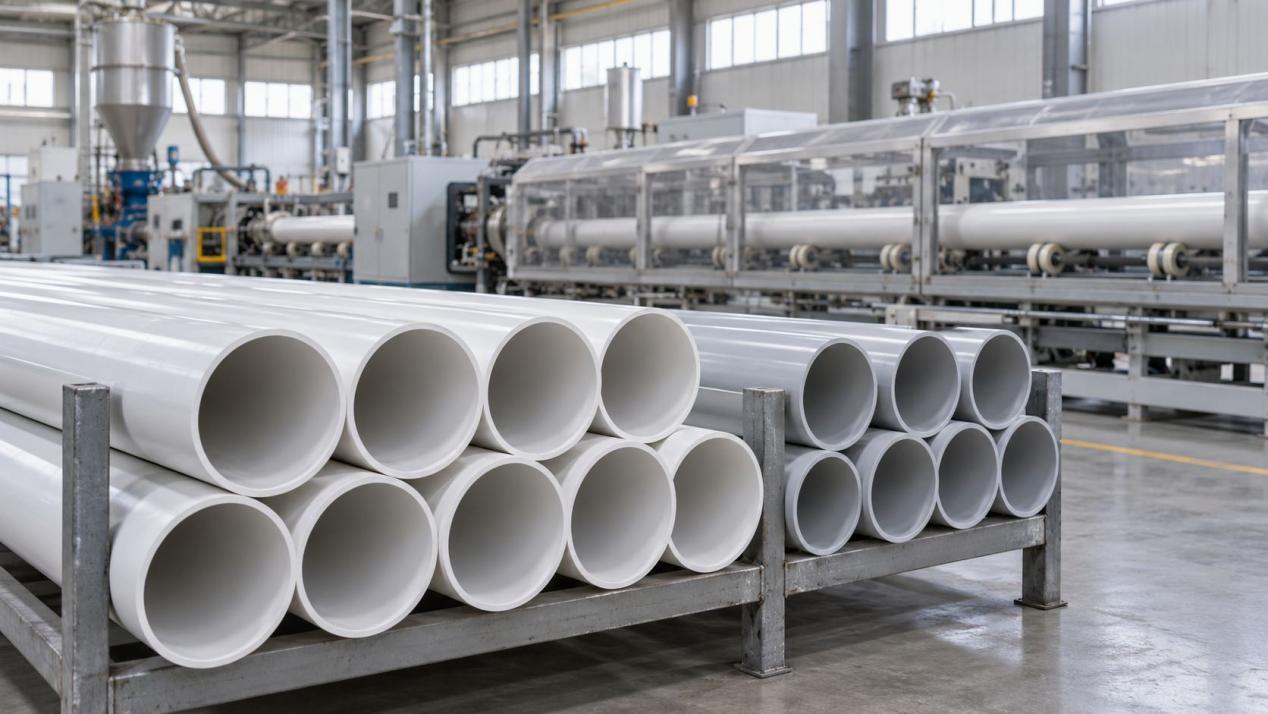
PVC pipe producers often face a practical trade-off: local projects may prioritize stable extrusion costs, while export or regulated downstream channels require cleaner material declarations. Stabilizer selection should be based on pipe application, filler loading, residence time, and target buyer market rather than price alone. Inteam provides both calcium-zinc and composite lead-salt stabilizer solutions for these requirements.
Pipe Extrusion and Stabilizer Selection
Rigid PVC pipe extrusion exposes the compound to heat, shear, and residence time before the pipe reaches sizing and cooling. Without sufficient stabilization, the material can discolor, release hydrogen chloride, corrode equipment, lose surface gloss, or become brittle.
Stabilizer selection should also reflect the pipe diameter and output rate. Small water-supply pipes and threading pipes often have lower extrusion flow, so material can stay in the screw longer and require careful stabilizer and lubricant adjustment.
Two Common Routes for Pipe Production
Calcium-zinc route for cleaner declarations
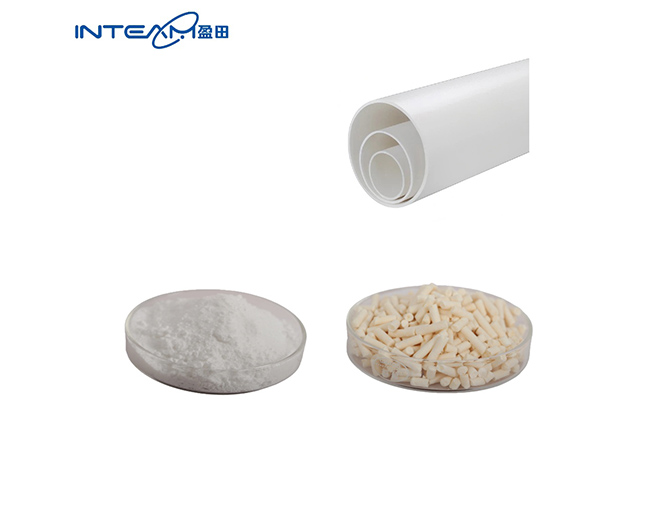
Inteam’s YC-316 is an environmentally friendly calcium-zinc composite heat stabilizer for PVC pipe products of various colors. It is formulated with calcium/zinc soaps (stearates), heat-resistant additives, primary and secondary antioxidants, and lubricating esters, and it complies with RoHS, REACH, PAHs, and NO-16P requirements.
Lead-salt composite route for cost-driven local use
HB-77 is a composite lead-salt PVC heat stabilizer for rigid pipe extrusion. It contains tribasic lead sulfate, lead stearate, lubricant, and heat-resistant additives, and it is suitable for water supply pipes, threading pipes, drainage pipes, irrigation pipes, and electrical casing pipes when the target market accepts lead-based systems.
Performance Criteria That Affect Output
Pipe factories usually judge a stabilizer by the defects it prevents on the line. When evaluating Inteam stabilizers, key indicators include smooth discharge, controlled extrusion torque, surface gloss, color retention, start-up scrap, and shutdown color difference all affect daily output and usable pipe length.
When the decision is still open, reviewing our broader product portfolio helps separate pipe-grade calcium-zinc systems from lead-salt composite systems and from stabilizers made for different PVC applications.
Formula Adjustment for Different Pipe Lines
A pipe stabilizer should be tested within actual plant production formulations. Higher filler loading, resin grade, lubricant balance, machine wear, die design, and output speed can change the stabilizer demand even when the same pipe category is being produced.
Track extrusion torque and die pressure after changing stabilizer dosage.
Check pipe color after startup, steady running, and prolonged shutdown and restart recovery.
Review surface gloss, flatness, and mold sticking before approving a formula.
Carefully increase stabilizer-lubricant loading for small-diameter lines with longer residence time.
Trial Run Evidence for Pipe Approval
Steady color through interruptions
Pipe trials should include more than a short startup sample. The compound needs to hold color during stable production and recover acceptably after a planned pause, because shutdown discoloration can create scrap before the line returns to normal output.
Torque and surface behavior
Extrusion torque gives an early signal about whether melt viscosity and lubrication are balanced. If torque rises, discharge becomes unstable, or the pipe surface loses gloss, the plant should review stabilizer dosage, lubricant level, filler loading, and die cleanliness together.
Market Fit Matters As Much As Processing
Developing markets can still show strong demand for lead-based stabilizer systems because cost and proven extrusion stability matter. Export-linked factories, however, should review whether downstream buyers expect lead-free materials or stricter declarations before choosing a lead route.
A. PVC热稳定剂 is therefore not only a processing additive. It is also a market-fit decision that affects quotation, compliance discussion, storage separation, and customer approval.
Pipe buyers should define acceptance samples before a large shipment. A short approved sample, a one-hour stable run, and a restart sample give clearer evidence than color judgment at only one moment of production.
Commercial planning also benefits from this technical clarity. When the stabilizer route is matched to pipe type and market requirements early, the buyer can compare cost-performance ratio without creating later risk around declarations, storage, customer approval, repeat orders, or field complaints.
Acceptance Records Reduce Repeat-Order Risk
Pipe stabilizer selection becomes stronger when the trial record follows the way pipes will actually be sold. A buyer supplying municipal, irrigation, drainage, and electrical casing channels may need different acceptance evidence even when the extrusion plant uses the same main resin family.
Export-linked orders should keep cleaner-declaration documents, retained pipe sections, and restart samples together. Local cost-driven orders should still record torque, color, discharge stability, and storage separation, because a low-cost route only works when repeated production remains predictable.
This is why pipe projects benefit from comparing both formula economics and market exposure before approval. The selected stabilizer should help the plant run steadily today while leaving enough evidence for customer questions after the shipment arrives.
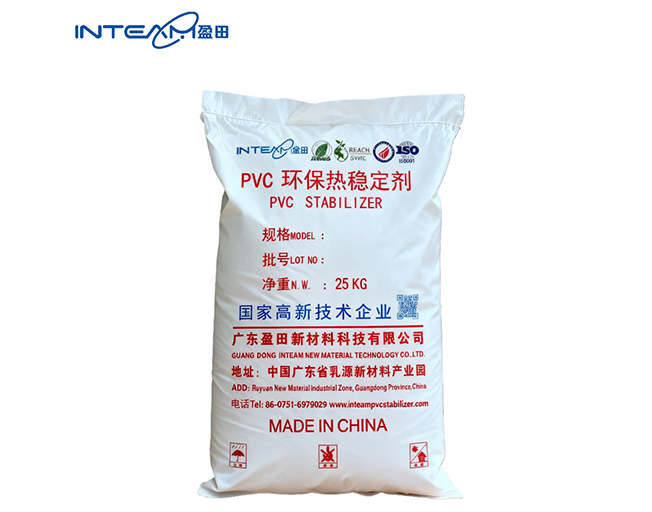
A final pipe review should also include packaging condition and warehouse handling. Stable formulation work loses value if moisture, cross-mixed stabilizer storage, or ambiguous batch identification creates avoidable questions during repeat orders.
Summary
PVC pipe stabilizer selection should match the extrusion line, filler loading, residence time, pipe specification, and destination market. Inteam offers two proven pipe‑grade solutions: YC-316 fits calcium-zinc pipe applications where cleaner declarations matter, while HB-77 supports accepted lead-salt pipe systems where cost-performance and extrusion stability are the key priorities.
For pipe projects, prepare resin, filler, pipe type, line speed, target market, storage plan, approved sample standard, shipment records, restart data, and current defect notes before discussing stabilizer dosage.
Ready to select your pipe-grade PVC stabilizer? Submit your production requirements to receive tailored advice, product samples and project quotation. Our technical team will respond promptly with engineer-backed feedback. Request Samples & Customized Quotation of PVC stabilizer.
常问问题
What is a PVC pipe stabilizer used for?
A PVC pipe stabilizer protects the compound from heat and shear degradation during extrusion, helping control color, flow, surface quality, and long-term pipe performance.
When is YC-316 the better pipe option?
YC-316 is the preferred choice when the pipe producer needs a calcium-zinc system for export-sensitive or cleaner-declaration markets.
When is HB-77 suitable for pipe extrusion?
HB-77 is suitable where a composite lead-salt PVC heat stabilizer is accepted and the factory needs strong cost-performance in rigid pipe extrusion.
Why do small-diameter pipes need extra attention?
Small-diameter water-supply and threading pipes can have lower extrusion flow, which increases residence time and makes stabilizer and lubricant balance more important.
Should lead and environmentally friendly stabilizers be stored together?
Lead-based products should be kept moisture-proof and stored or transported separately from environmentally friendly products to avoid cross-contamination concerns.