

Which Liquid Stabilizer Optimizes Flexible PVC Thermal Stability?
Time : May 21, 2026 View : 1,083
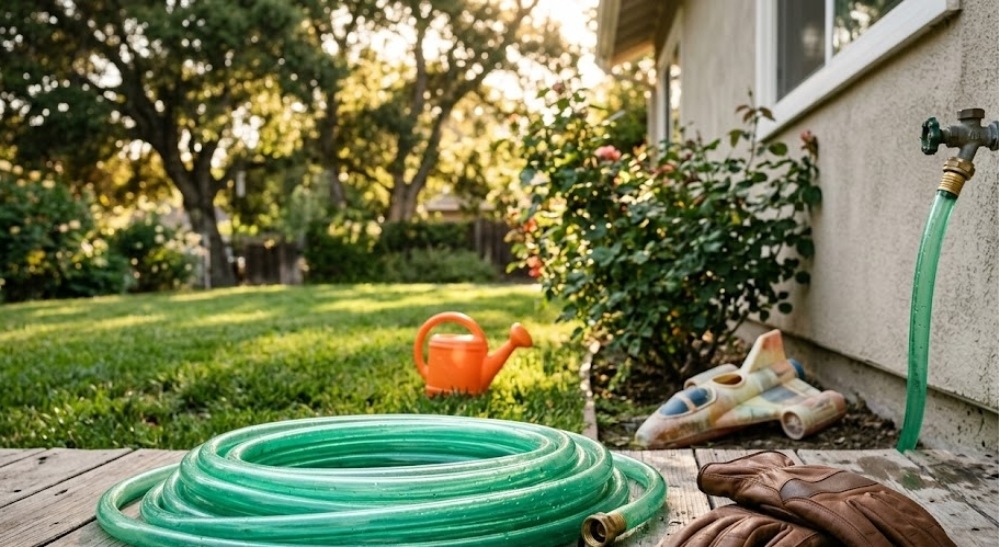
Have you ever observed how a transparent PVC garden hose remains pliable over many years? In contrast, an inexpensive plastic toy may become discolored and fragile after only a single summer. This difference stems from intricate chemical processes at the molecular scale. For producers in the flexible PVC sector, maintaining products that are transparent, flexible, and long-lasting involves a persistent struggle against elevated temperatures. Recent changes in international commerce and ecological regulations have prompted firms to shift from traditional lead compounds to intelligent PVC Composite Heat Stabilizers in liquid form.For manufacturers of medical tubing or premium synthetic leather, selecting the right additive is essential for optimizing product performance and ensuring long-term stability.
The Vital Balance of Thermal Protection in Soft Plastics
Flexible PVC stands out due to its substantial plasticizer content. This makes the material pliant yet more susceptible to specific degradation forms. During manufacturing, PVC begins to release HCl and degrade at temperatures as low as 120°C–130°C. However, typical manufacturing requires processing levels between 160°C and 220°C, making effective thermal stabilization essential to prevent structural breakdown during production.It releases harmful hydrogen chloride gas. Here, the PVC liquid stabilizer serves as a protective agent. It intercepts this gas promptly, thus safeguarding equipment and preserving the plastic’s essential characteristics.
Lacking precise control in the mixing procedure can lead to rapid discoloration. The material shifts from clear to pale yellow, progresses to orange, and ultimately darkens to black. Such alteration signals a decline in the plastic’s durability. A reliable, flexible PVC stabilizer guarantees stability. It performs well not only amid the intense factory heat but also across the product’s full service life with end-users.
How Liquid Stabilizers Outperform Solid Alternatives
Solid stabilizers dominated the field for many years. However, liquid stabilizers are now gaining ground rapidly in flexible uses. The explanation lies in their superior blending. Consider dissolving granulated sugar in tea compared to a lump; the liquid form integrates evenly at the molecular scale. Consequently, it offers a more uniform defense against thermal and optical stresses, making it the ideal transparent PVC liquid stabilizer for demanding applications.
- Optimized Optical Clarity:Liquid stabilizers achieve molecular-level dispersion within the PVC matrix, ensuring exceptional compatibility. Beyond simple blending, these stabilizers are formulated to match the refractive index of the PVC resin, while their organic acid metallic salts suppress the formation of light-scattering crystalline chlorides, resulting in superior transparency and minimal haze.
- Easier Handling on the Factory Floor:Measuring and adding liquid stabilizers proves straightforward and tidier than managing powdery substances. As a result, it enhances the workplace conditions and reduces risks from airborne dust.
- Self-Lubricating Properties:Numerous liquid formulations incorporate inherent lubricating qualities. These aid the molten plastic in flowing through molds with greater ease. Moreover, they reduce energy consumption by 10–20%.
Maximizing Efficiency in High-Heat Environments
For production supervisors, PVC heat stabilizer efficiency ranks as a key concern. They seek additives that deliver substantial benefits with minimal quantities. Liquid composite stabilizers frequently function as integrated packages. These unite multiple thermal stabilizers into a single, user-friendly item. Such a design improves the cost-effectiveness ratio. It enables achieving quality objectives without exceeding financial limits.
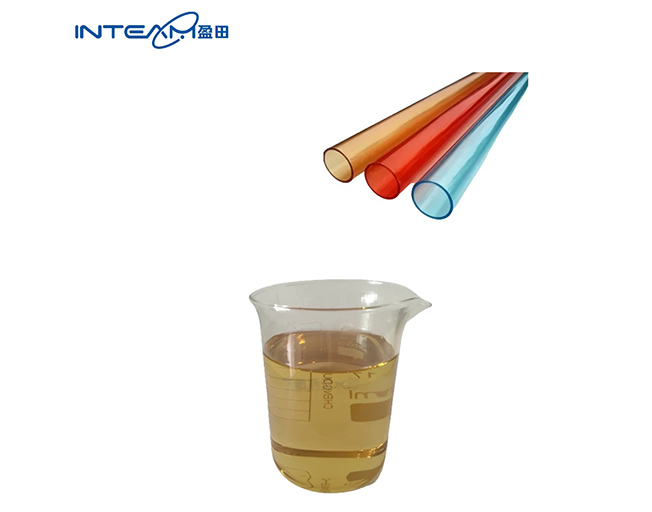
In flexible PVC contexts, efficiency encompasses avoiding “zinc burning.” This refers to a common problem where the material abruptly darkens in processing. Contemporary liquid calcium-zinc or barium-zinc formulations inhibit zinc ion catalysis and delay zinc burning. They provide a broader margin of safety in operations. Inteam’s research and development group concentrates on these precise mechanisms. Their goal is to keep production lines running without unplanned stops.
Achieving Crystal Clear Results with Advanced Additives
When customers demand full transparency, additive selection grows even more essential. Conventional lead compounds or metallic soaps tend to obscure light, rendering them unsuitable for clear packaging or medical containers. For this reason, high-transparency PVC additives rely predominantly on liquid forms. Their compact molecular structures avoid impeding light passage. This permits the inherent clarity of PVC to emerge fully.
These liquid stabilizers provide advantages beyond aesthetics. They enhance resistance to light exposure. For items intended for exterior applications, such as transparent plastic sheets or promotional fabrics, solar protection is crucial. Liquid stabilizers commonly feature phosphites. These components decompose peroxides formed by light and oxygen. In doing so, they avert the unattractive reddish-brown discoloration that arises gradually.
Solving the Heat Sensitivity Puzzle
PVC’s primary difficulty arises from its melting temperature being dangerously close to its decomposition temperature. Significant decomposition starts at 120-130°C. Yet, molding demands much higher heat. This limited range calls for a stabilizer that responds quickly and endures over time. Employing a flexible PVC stabilizer that addresses both initial color retention and long-term durability allows producers to maintain uniform output from the start of operations to the end.
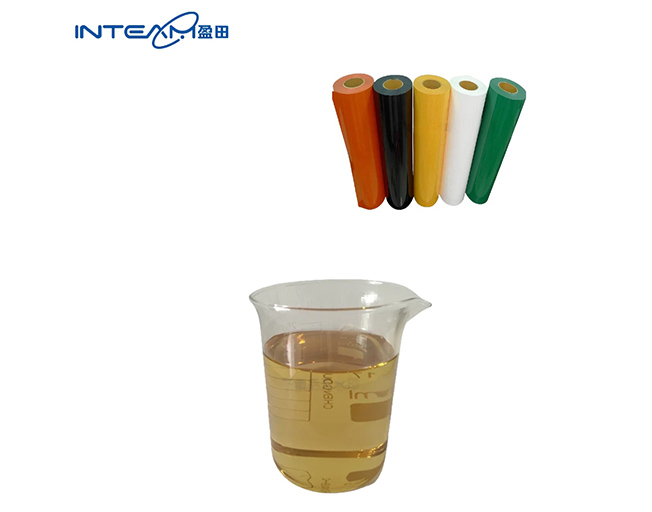
- Neutralizing HCl: The stabilizer captures and neutralizes released HCl. This halts the cascading breakdown that could otherwise destroythe polymer structure.
- Replacing Unstable Chlorine Atoms:Functional elements in the stabilizer replace unstable chlorine atoms within the PVC structure. This process reinforces the material internally at its core.
- Inhibiting Oxidation:Antioxidants embedded in the liquid mixture block degradation from atmospheric exposure and mechanical forces in the processing equipment.
Why Smart Producers Choose Inteam Solutions
In this sector, a flawed production run can incur substantial financial losses. Thus, supplier dependability is paramount. At Inteam, we offer more than mere chemicals; we deliver pathways to enhanced manufacturing. Our liquid stabilizers deliver excellent thermal stability. Even during equipment delays, the material resists rapid breakdown. This prevents blockages in expensive components like screws and dies.
We recognize that uniform solutions seldom suffice in chemical processes. Whether seeking an environmentally sound calcium-zinc liquid for toy production or a robust barium-zinc variant for robust hoses, our specialized knowledge aligns formulations with your machinery and objectives. We invite you to consult our technical experts. They can guide you toward the 15-30% efficiency improvements noted in current sector analyses.
Final Thoughts on Modern PVC Formulation
Adopting a superior PVC liquid stabilizer has become essential rather than optional for market competitiveness. By prioritizing PVC heat stabilizer efficiency and the exceptional transparency from high-transparency PVC additives, you can create items that align with rigorous global criteria for appearance and texture. As sustainability advances, these liquid systems achieve an ideal balance between environmental compliance and processing performance.
Prepared to enhance your PVC manufacturing? Inteam’s specialists are available to assist in identifying the ideal flexible PVC stabilizer suited to your requirements. Explore our product catalog or contact us today to obtain a sample and witness the improvements in stability and transparency firsthand.
FAQs
Q: In what ways does an Inteam PVC liquid stabilizer enhance the transparency of soft PVC items?
A: Solid soap-based options often fail to integrate fully, leading to uneven distribution and reduced clarity. However, our PVC liquid stabilizer spreads evenly at the molecular level. This approach cuts down on light scattering effectively. As a result, it ensures your products achieve the top benchmarks set by high-transparency PVC additives.
Q: Is it possible to substitute toxic lead-based systems with an Inteam flexible PVC stabilizer?
A: Absolutely, our liquid calcium-zinc stabilizers serve as reliable, green alternatives to outdated lead options. They deliver excellent thermal stability throughout the processing stages. At the same time, they eliminate the serious health risks tied to heavy metal exposure in traditional formulations.
Q: What features distinguish Inteam’s formulas for PVC heat stabilizer efficiency in fast-paced production setups?
A: High-speed operations demand stabilizers that handle intense conditions without compromising quality. Our products incorporate integrated lubricants, which lessen material resistance and melt flow resistance during melting. This facilitates quicker throughput and reduced energy consumption. Furthermore, they uphold excellent color retention across extended runs.